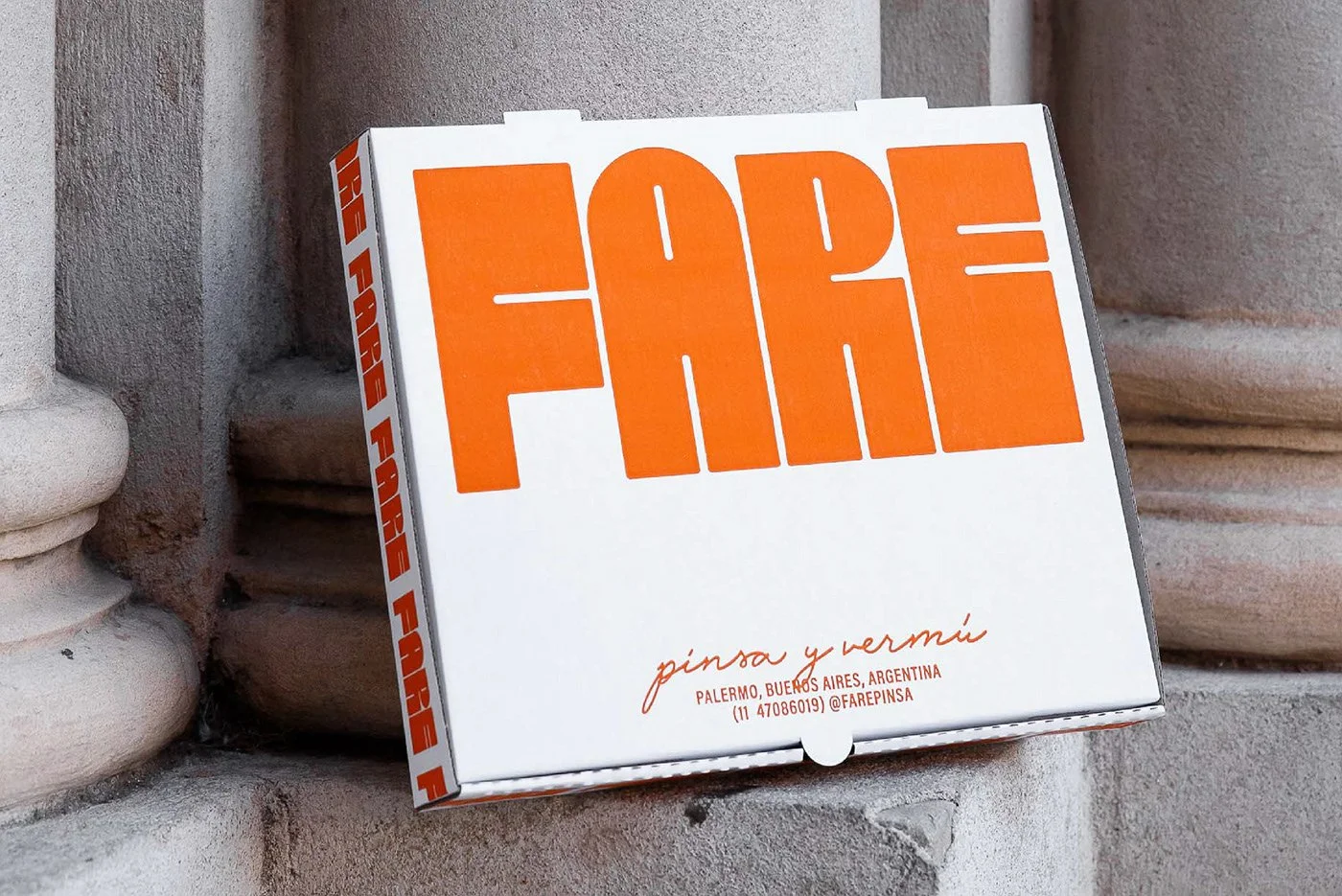
Fare pinsa restaurant branding
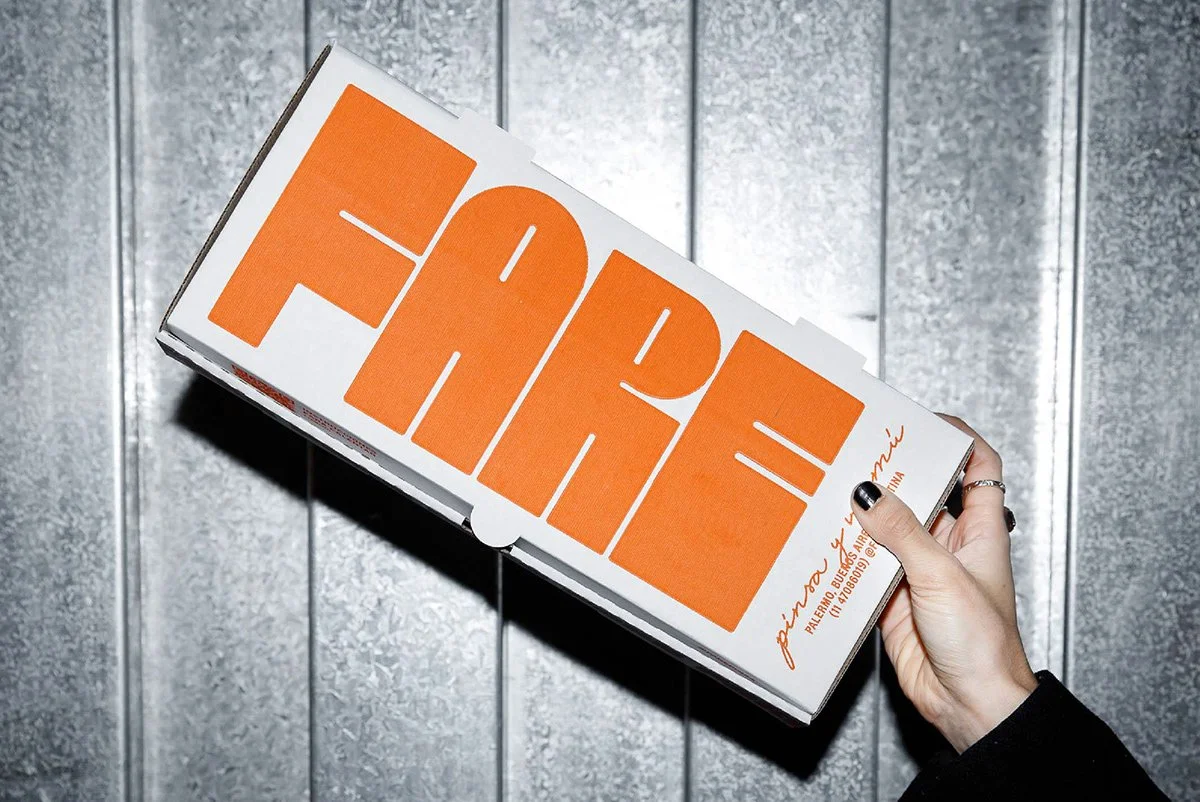
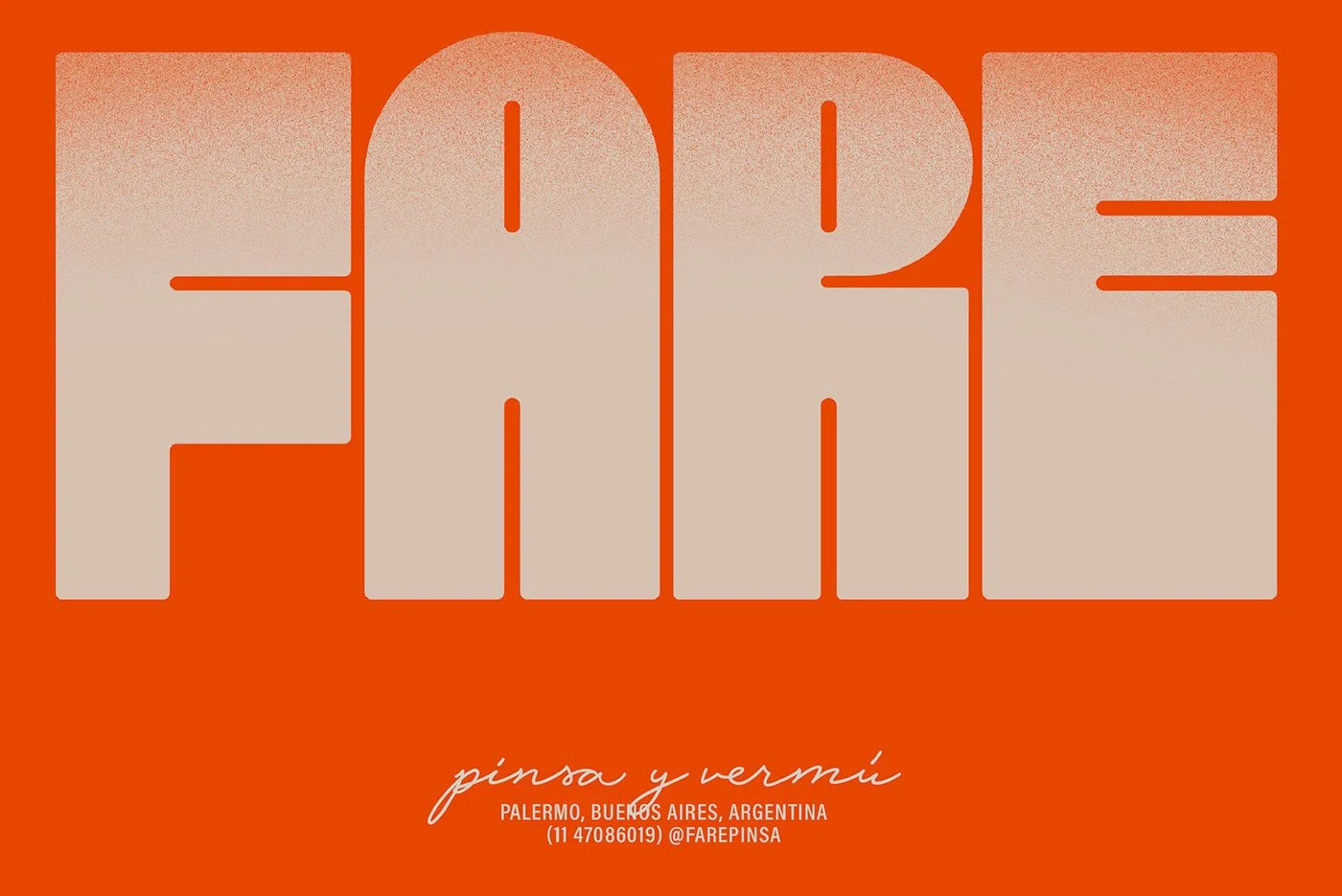
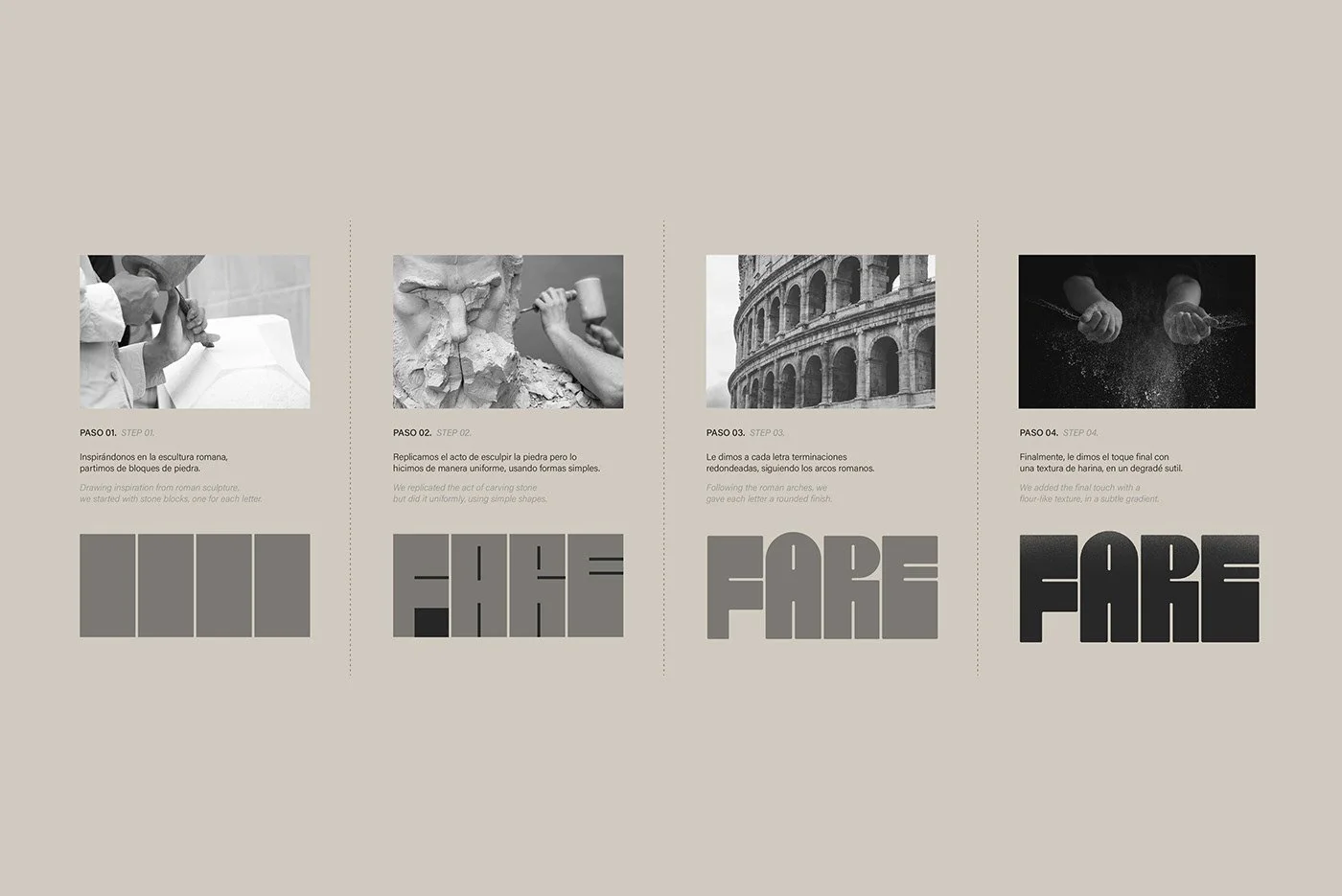
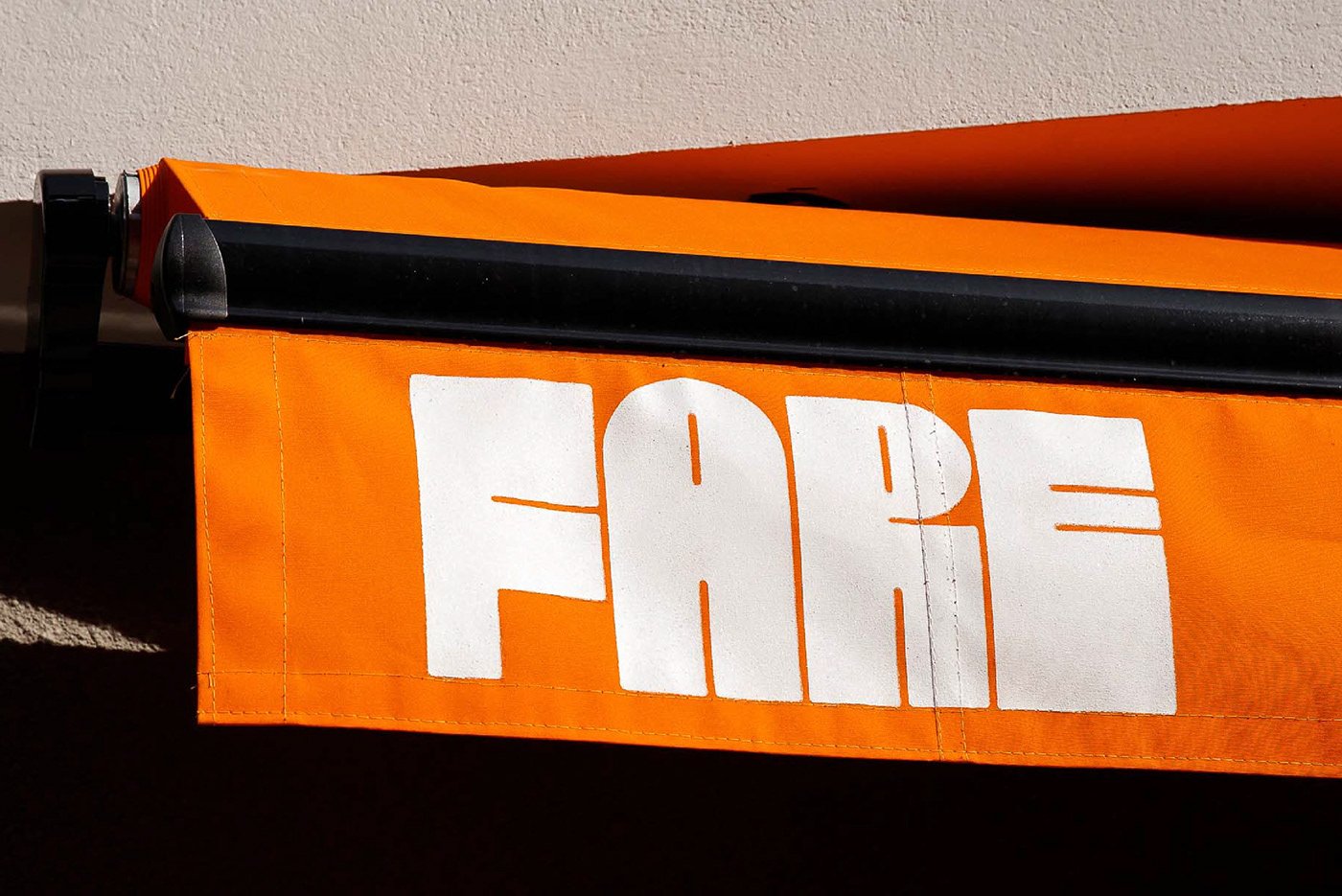
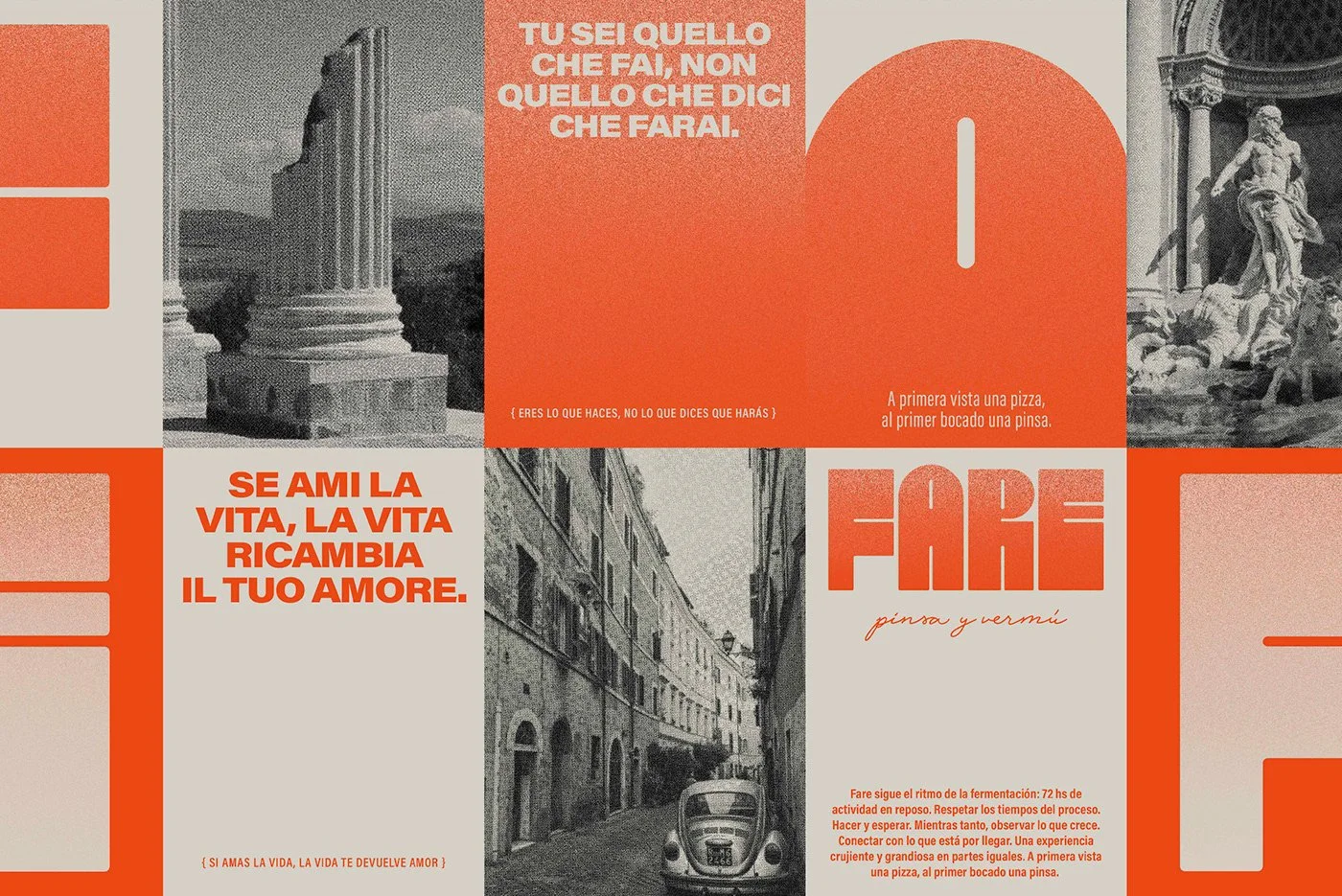
The branding for FARE offers a compelling demonstration of historically informed identity design. The project roots itself in the Roman origins of the product (Roman Pinsa) rather than leaning on the more typical Neapolitan-pizza aesthetic. That conceptual anchor is the strongest strategic move here. According to the designers: “the logo draws initial inspiration from the idea of sculpting on stone, then adjusts to Roman architecture: strong like a Roman column, curved like the Colosseum windows, dusted with flour, as it’s always close to the kitchen.”
The choice of name—“Fare,” meaning “to do” in Italian—serves as a semantically resonant opening salvo for the brand. It positions the restaurant not simply as a purveyor of food but as a workshop, a place of making. That framing aligns well with the slow-fermented, crafted quality of Pinsa. The name works as both an anchor and a mnemonic device.
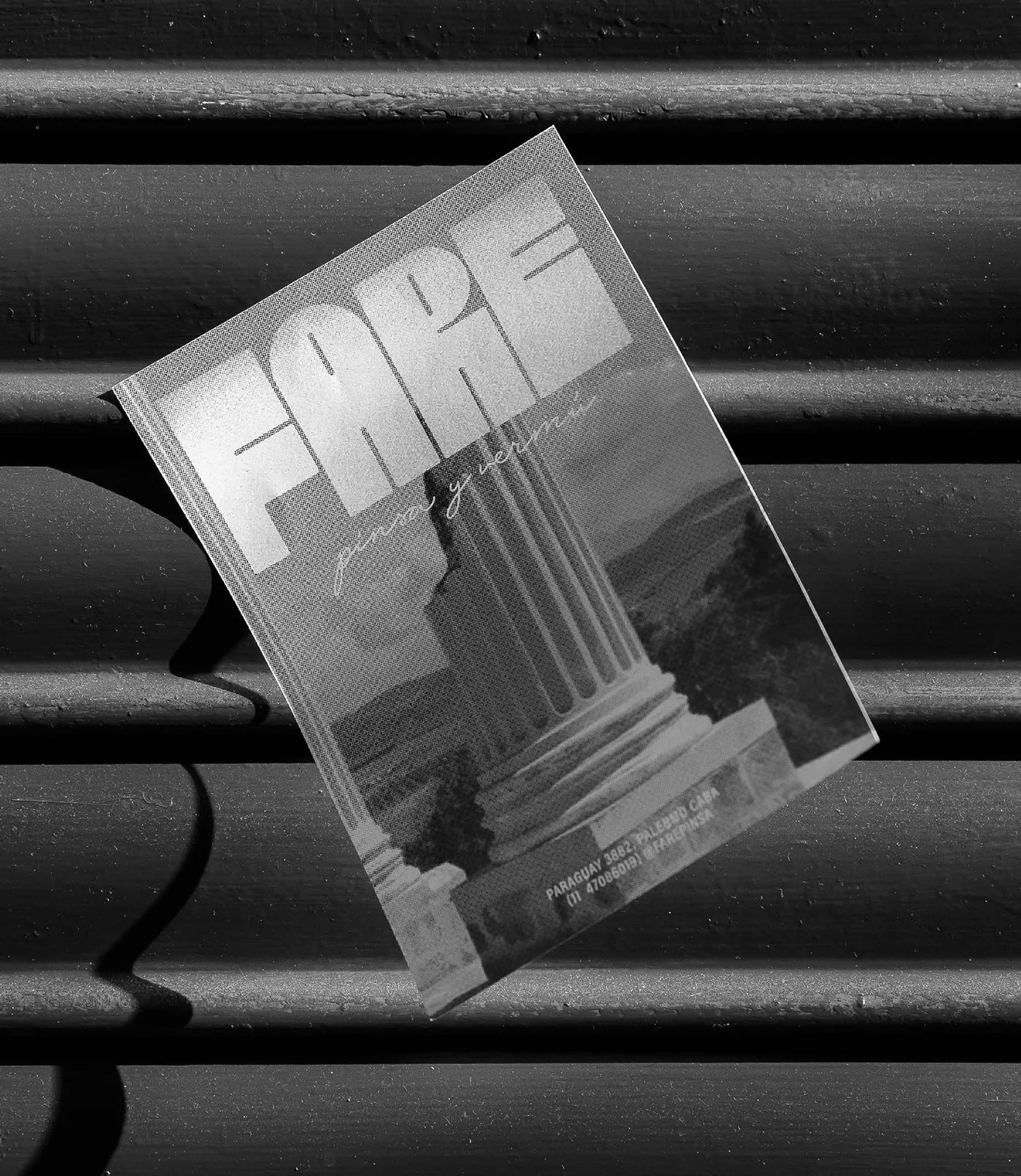
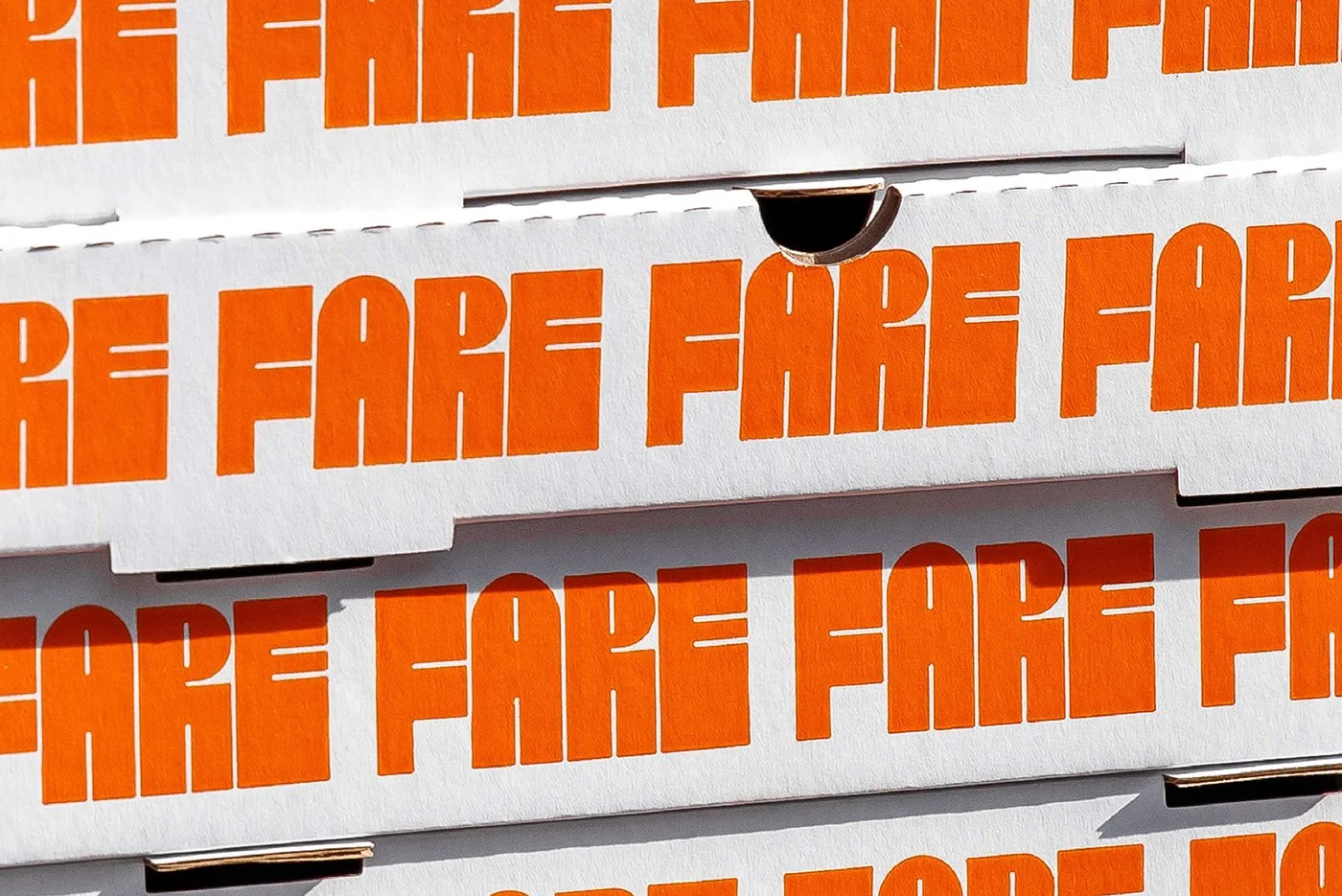
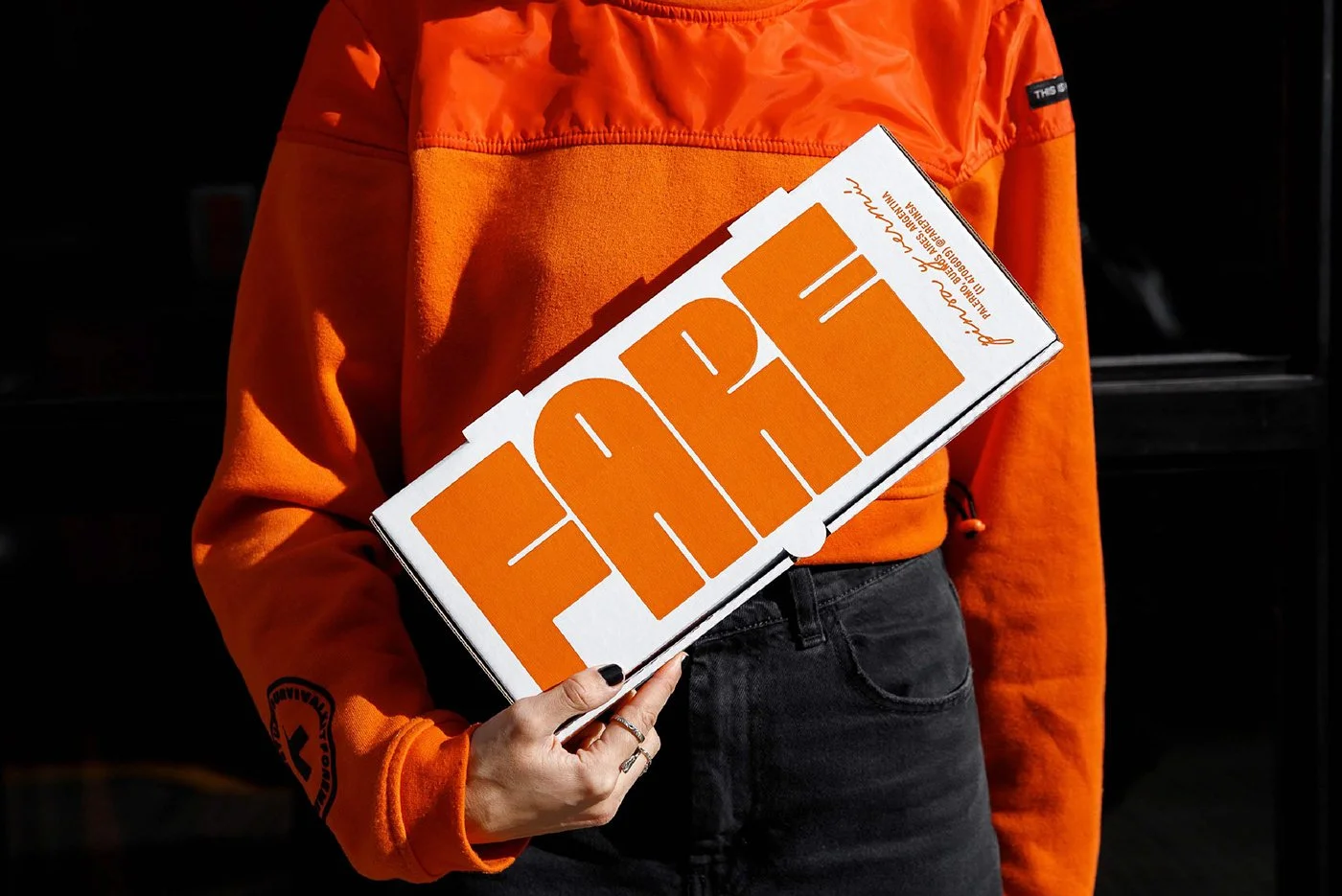
Visually the identity leans into what one might call a contemporary reinterpretation of classical Roman monumentality. The logo evokes stone carving and architectural gravitas through sturdy letterforms and subtle curves reminiscent of iconic Roman structures. This allusion accords the brand an implied lineage — seriousness, weight, and a sense of craft rooted in history — which elevates it beyond what a typical pizza shop might convey.
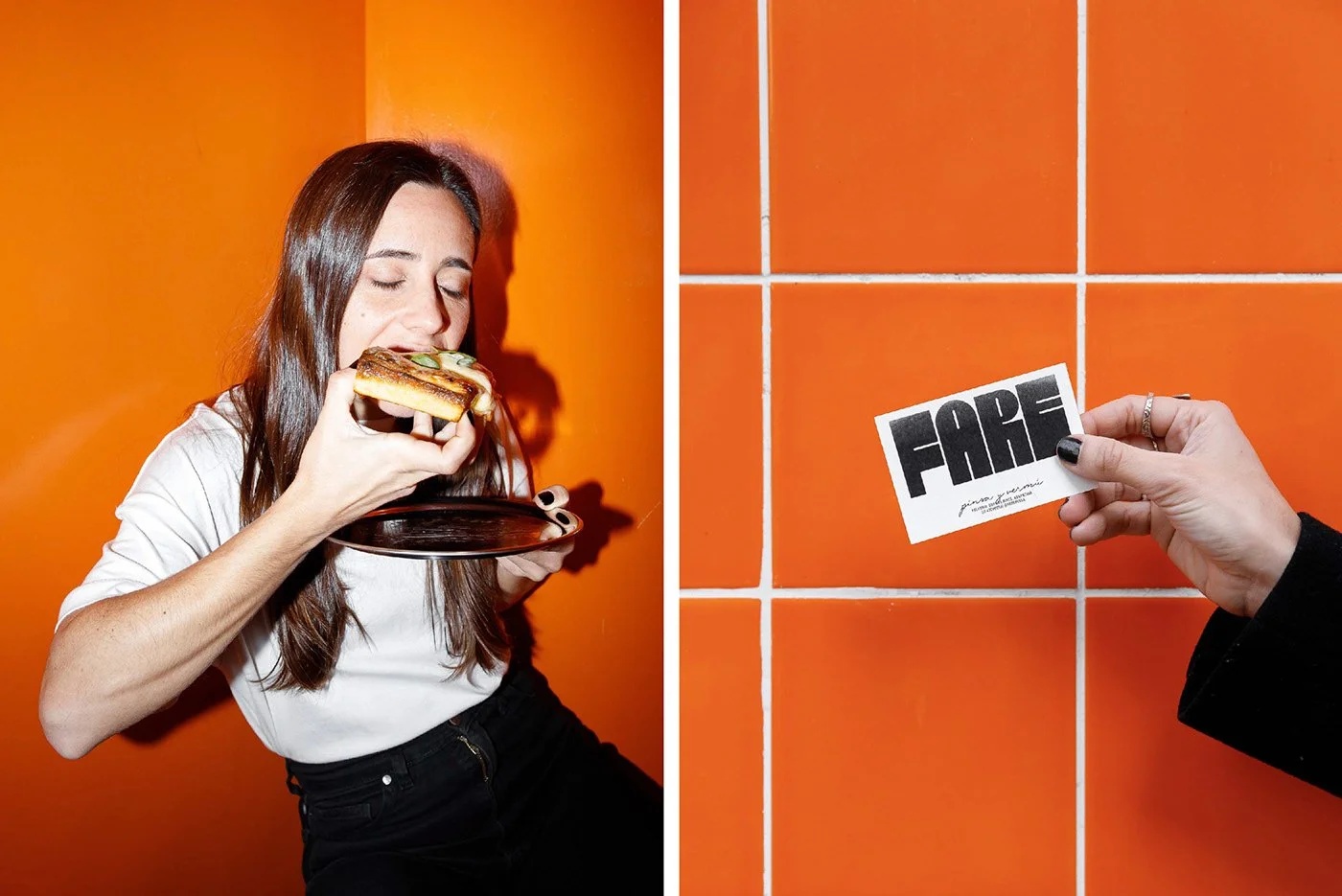
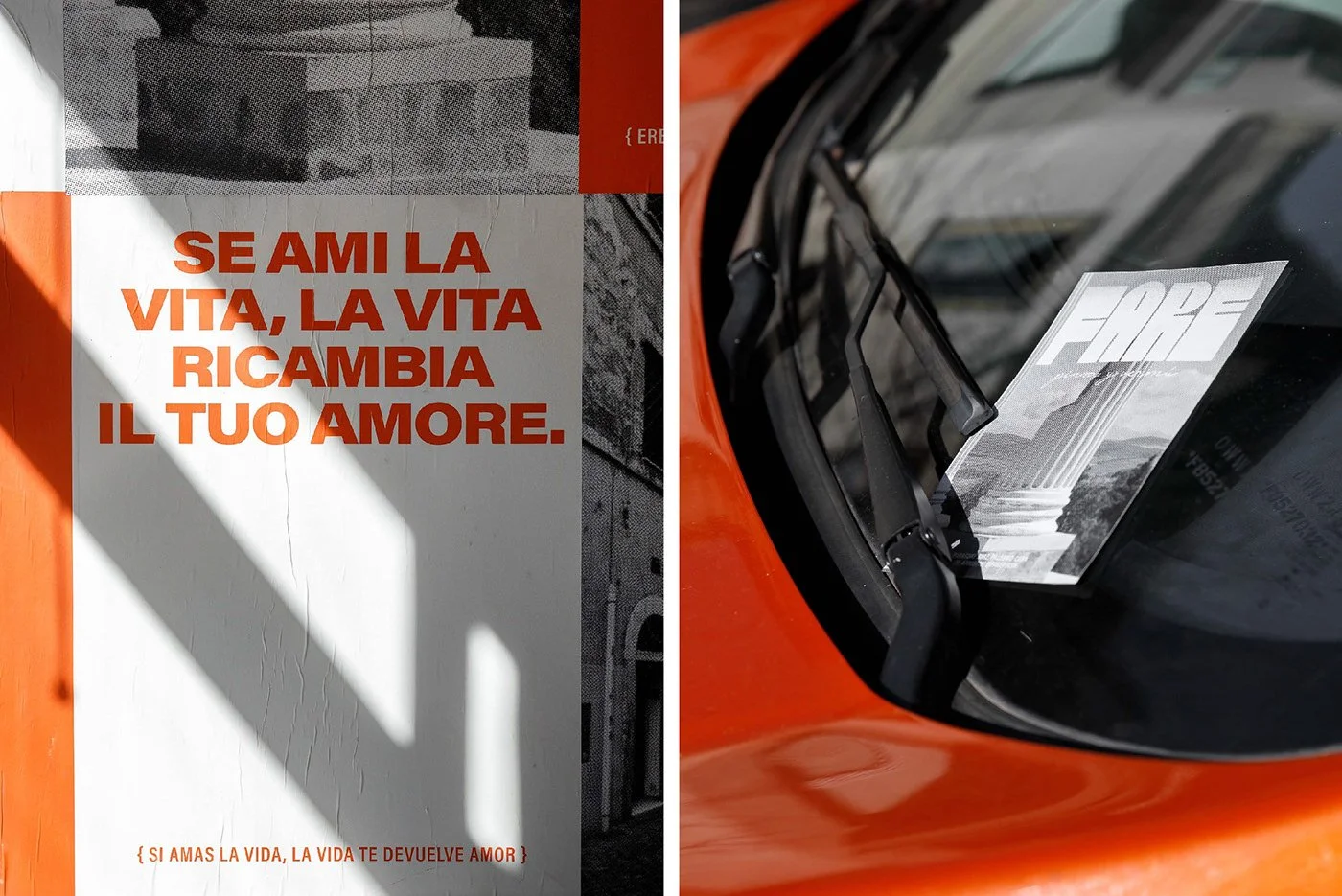
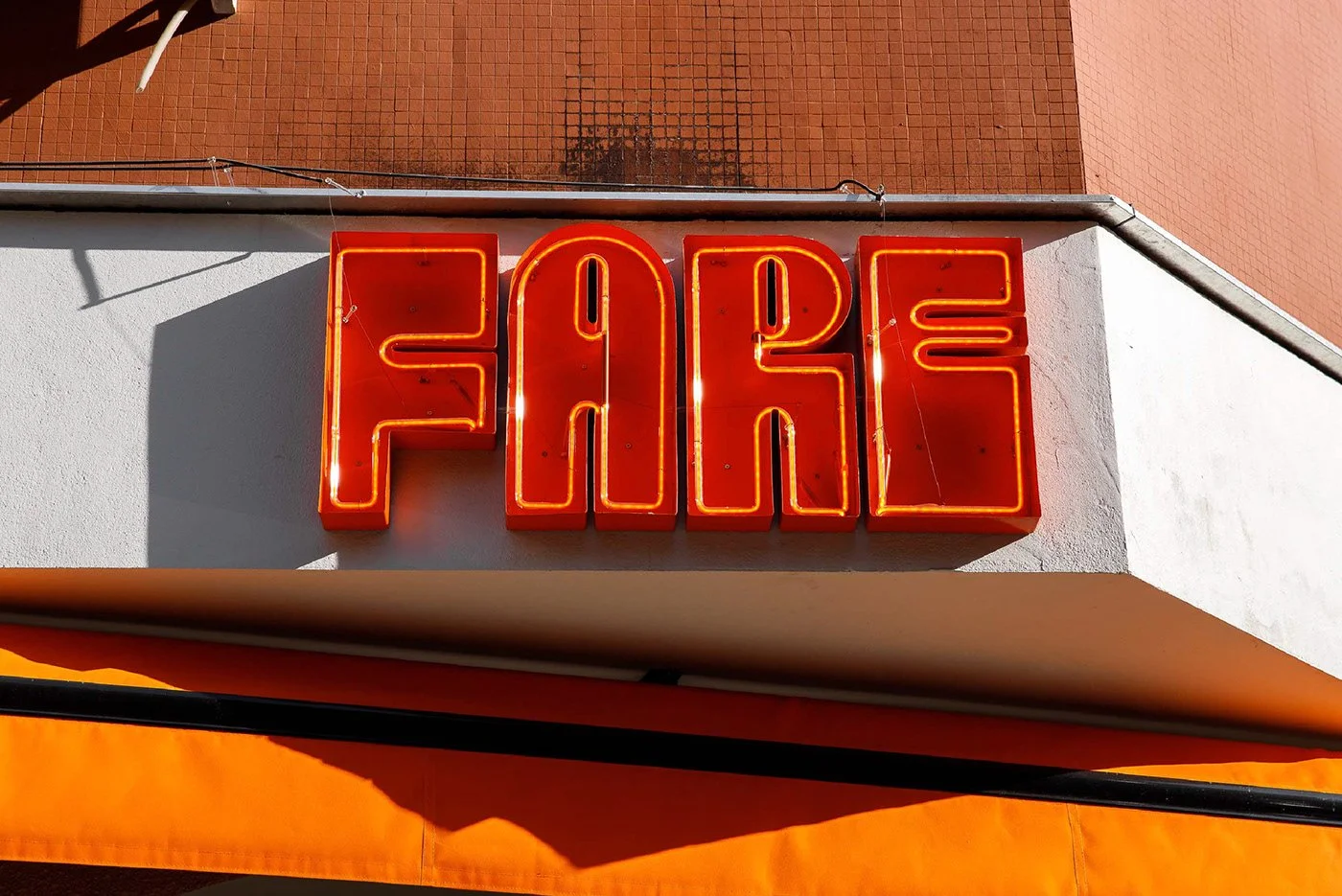
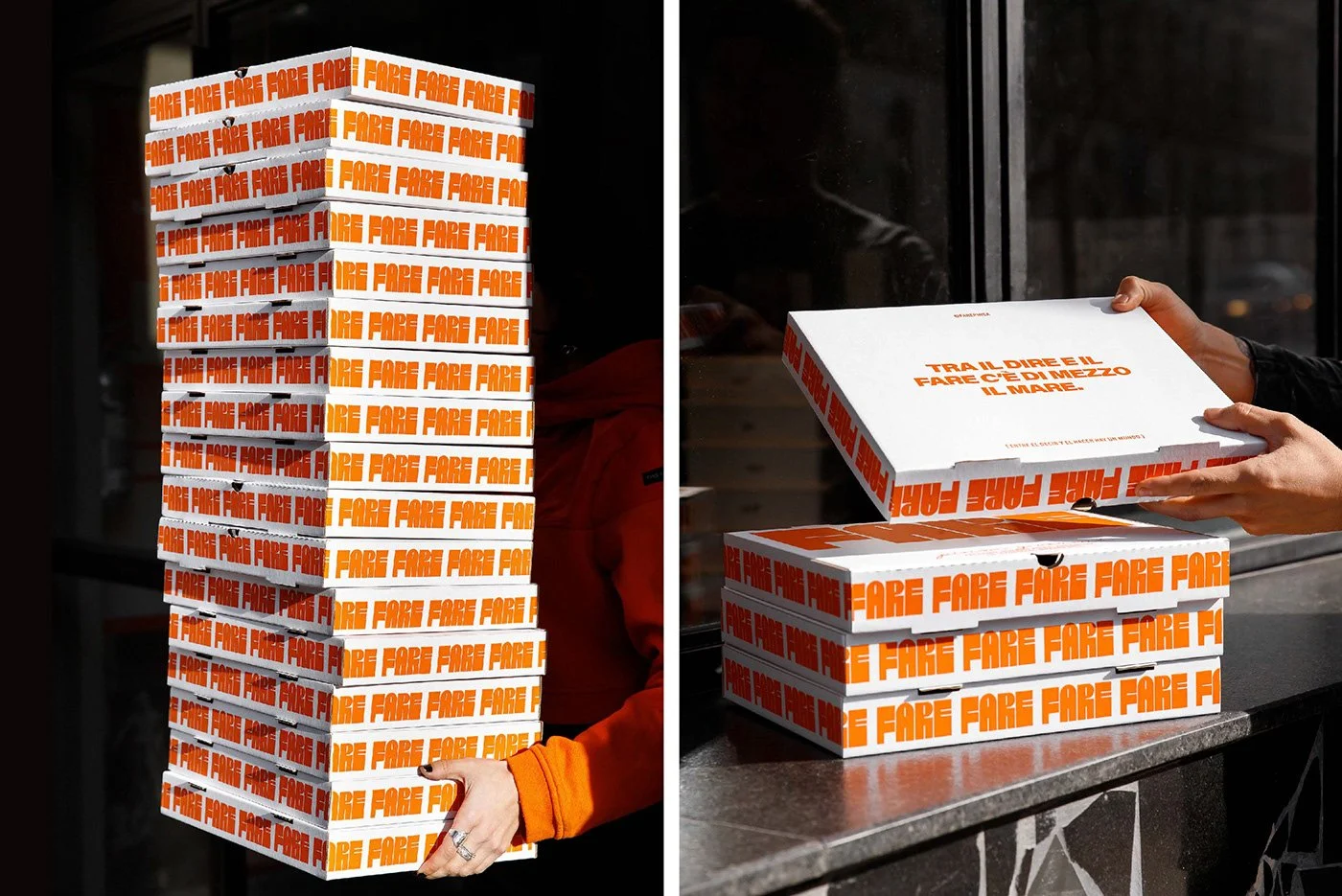
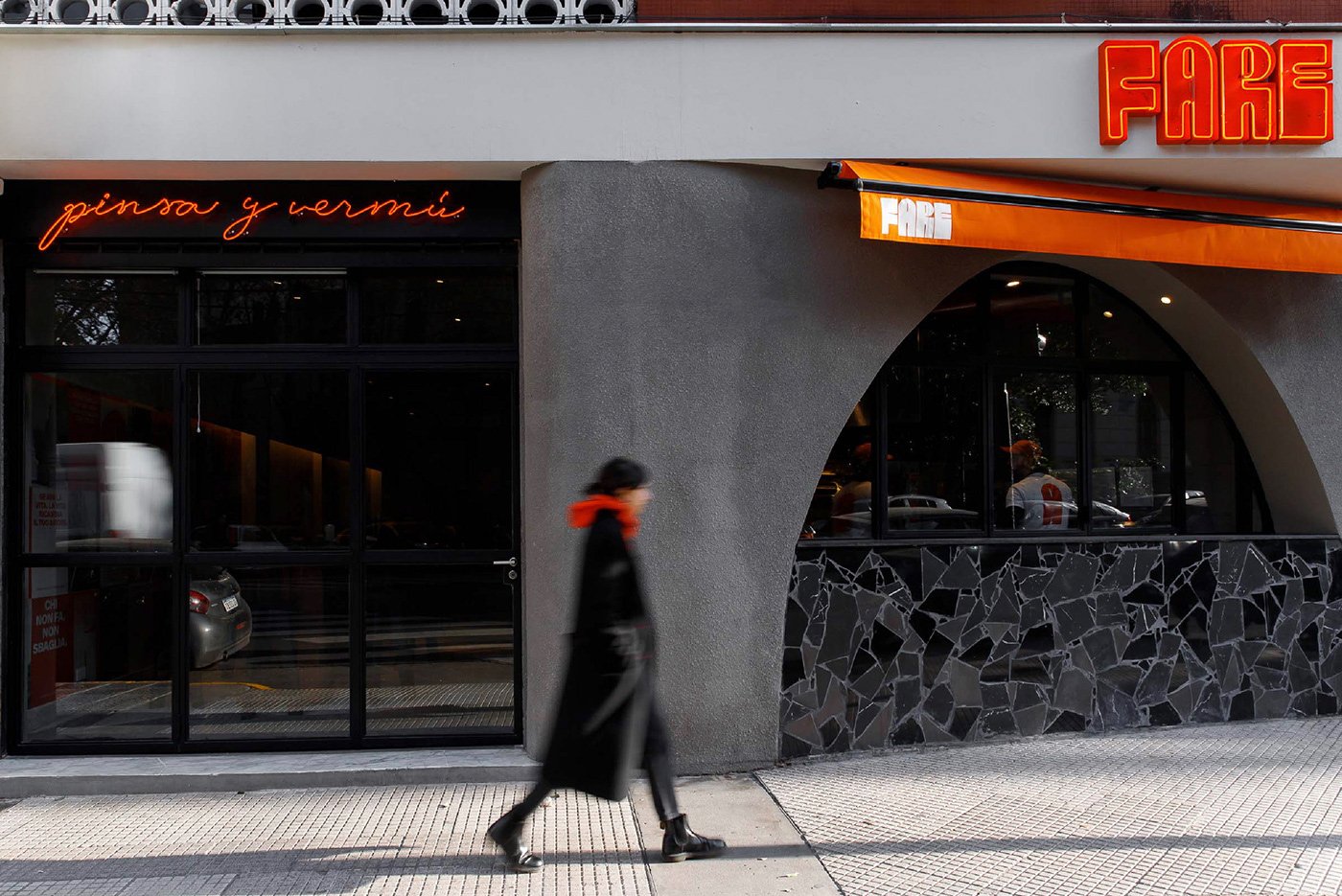
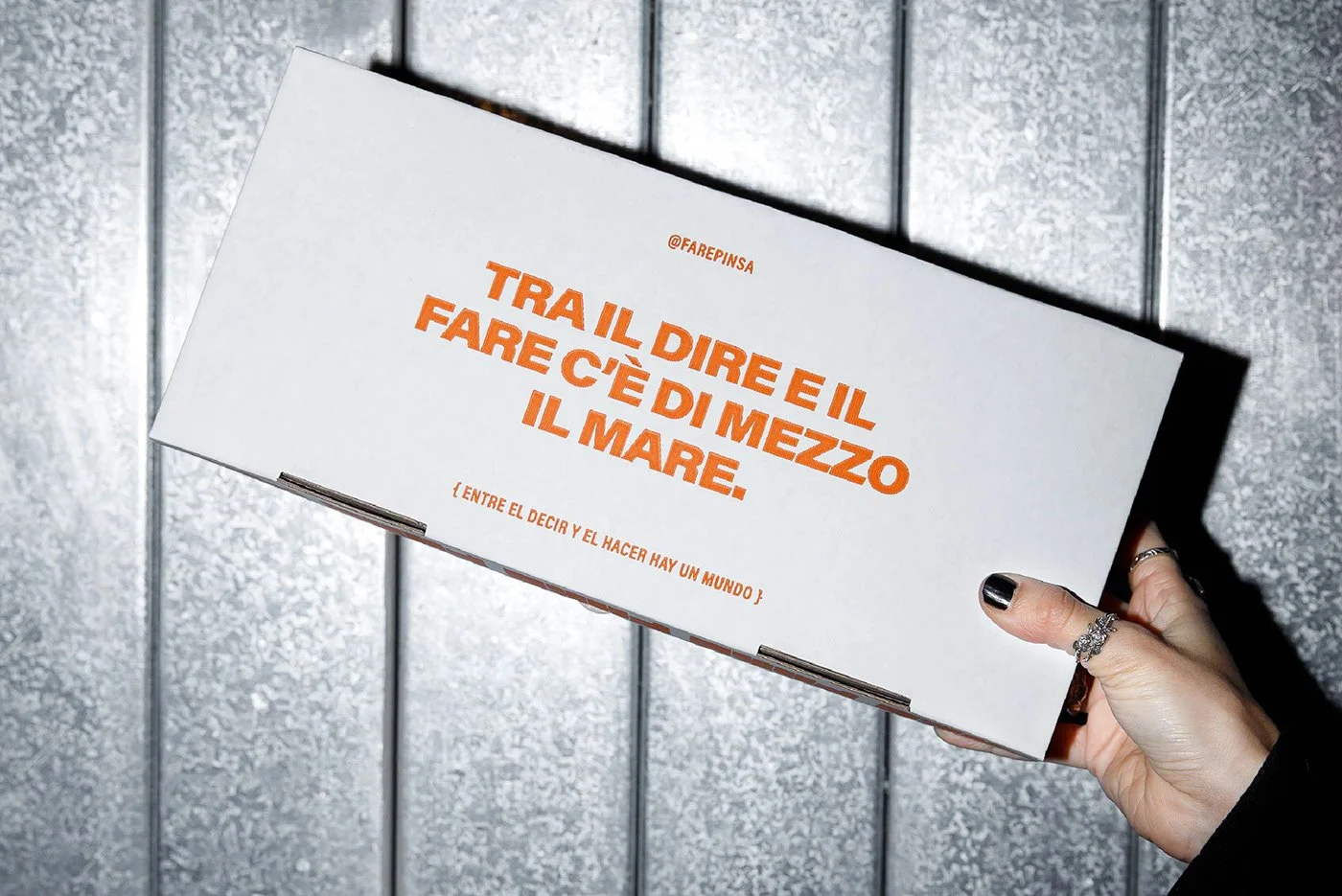
The execution across applications — signage, pizza boxes, menus, social media, uniforms, photography — is remarkably consistent. This consistency reflects disciplined art direction and thoughtful brand architecture. The uniformity ensures that whether one encounters the logo on a box, a menu, or a sign, the brand remains clearly identifiable and cohesive. That kind of coherence is rare in fast-casual pizza concepts and gives FARE a sense of identity maturity.
The monochrome (or near-monochrome) palette and restrained typographic treatment support the classical impulse. By avoiding ornamental flourishes common to pizzerias (handwritten scripts, rustic textures, cartoonish icons), the design stakes a claim to minimal dignity and quiet confidence. This visual restraint suggests a brand that trusts the product to speak for itself.
However there are aspects where the work could benefit from further refinement. The severe architectural references and classical minimalism risk reading as austere or even cold rather than warm and inviting. For a pizzeria — a category where warmth, conviviality, and sensory indulgence matter — the brand’s discipline may underplay the emotional, social dimension of dining. The absence of warmth in the color palette and the reliance on heavy typographic weight may inadvertently distance potential customers seeking comfort and atmosphere.
The logo, while conceptually strong, could test as heavy on smaller or less ideal surfaces. The strong, column-like letterforms risk losing clarity or becoming visually oppressive when scaled down (for example on social-media icons, sticker labels, or certain packaging). Without a lighter or secondary wordmark or flexible variant, the identity might struggle in more playful or informal contexts.
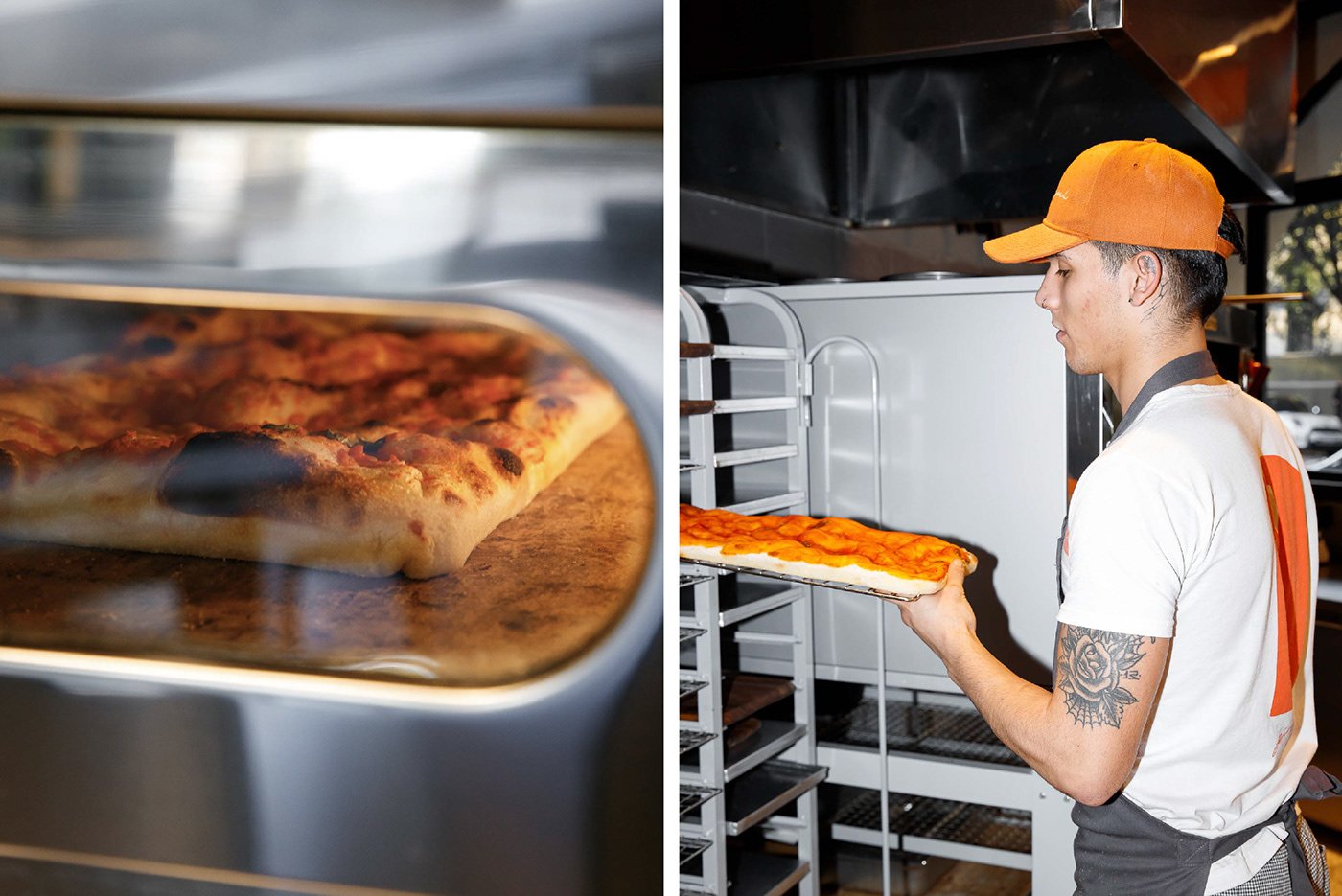
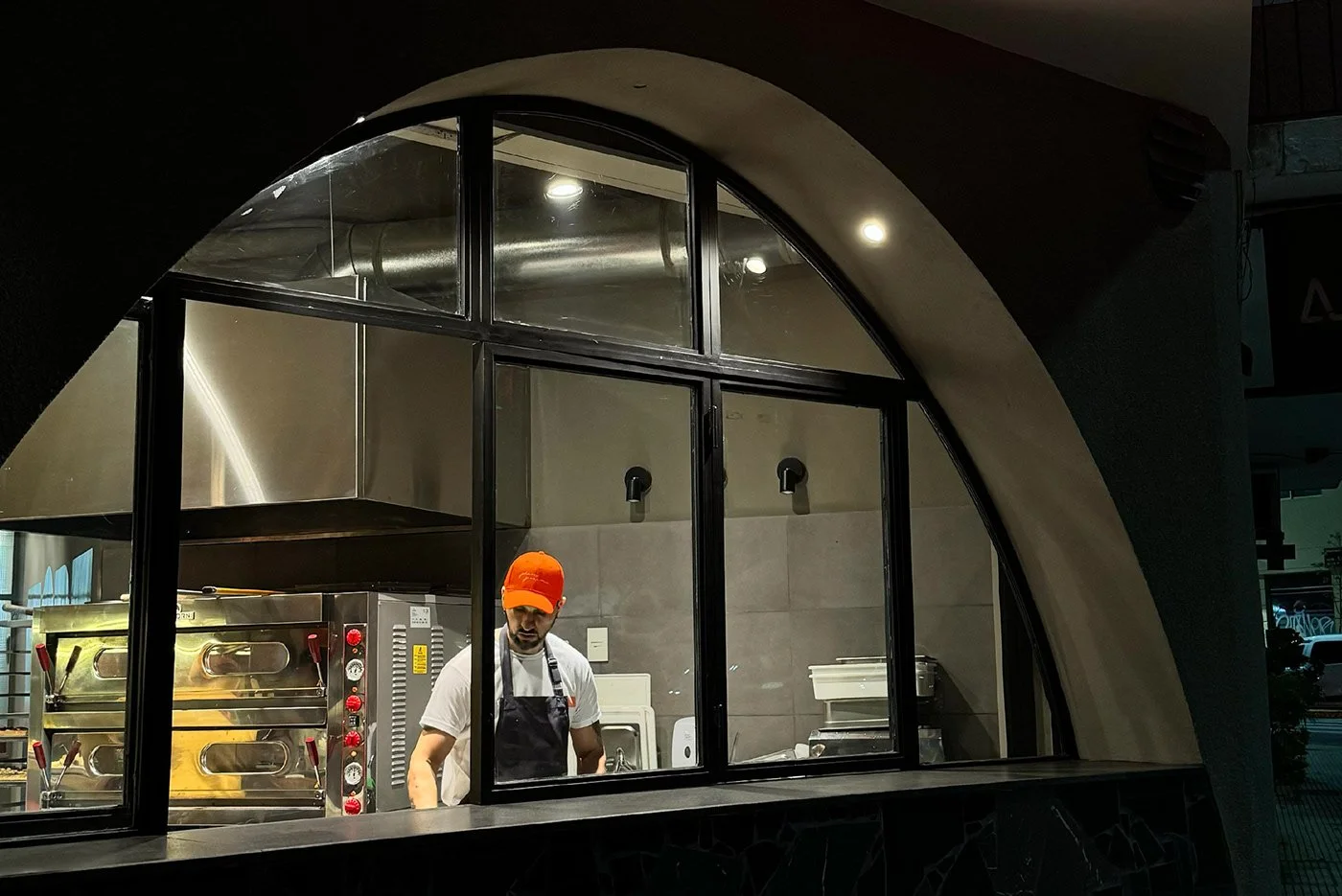
The photography and overall art direction strongly support the brand narrative, but the human element feels understated. There is limited evidence in the presentation of warm ambience shots, candid diners, or any sense of communal dining energy. For a brand centered on a social, communal meal like Pinsa, the almost clinical framing may undercommunicate the experience.
In addition the cultural positioning — elevating Pinsa as something distinct from the crowded Neapolitan-style pizza market in Buenos Aires — is smart. Yet the tension between classical austerity and the warm, approachable social ritual of pizza may need a more careful balancing. The brand looks more like a design-studio manifesto than a lively neighborhood pizzeria.
Overall the FARE identity exhibits conceptual clarity, strong stylistic discipline, and real coherence across touchpoints. It is a mature, restrained, historically cognizant brand identity. The main risk lies in emotional tone: the design trades warmth and convivial energy for gravitas and conceptual purity. Unless the operational experience — food, atmosphere, service — compensates for that reserve, some patrons may perceive the space as sleek but impersonal.
Credits
Location: Argentina
Studio: Estudio Nuar
Creative Direction by Manuela Ventura and Melisa Rivas.
Design by Nicole Kupczok, Olivia Moyano, Manuela Ventura, and Melisa Rivas.
Copywriting by Mariela Rivas.
Photography by Malena Fradkin.
Architecture by Arenal Arquitectura