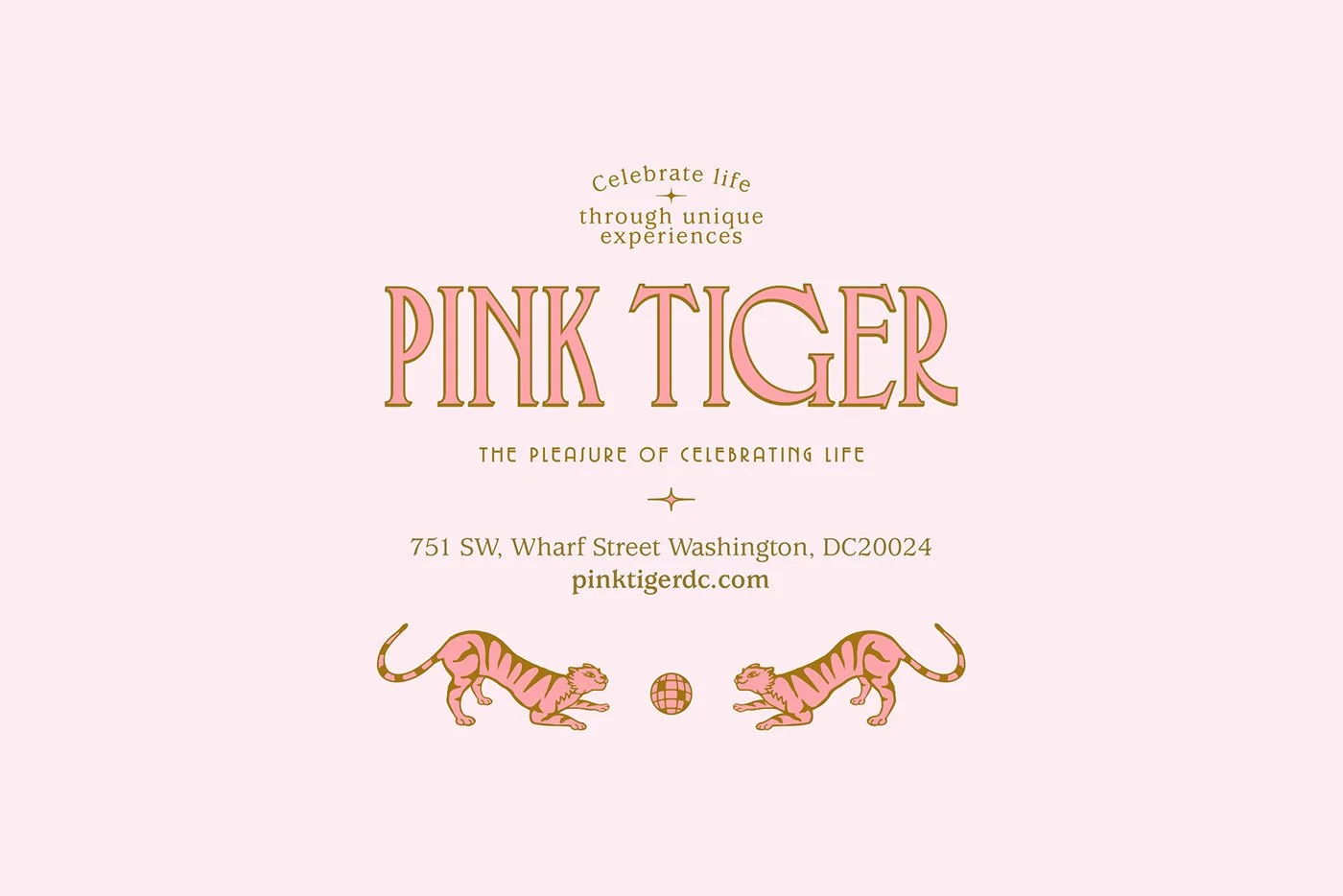
Pink Tiger Restaurant Branding
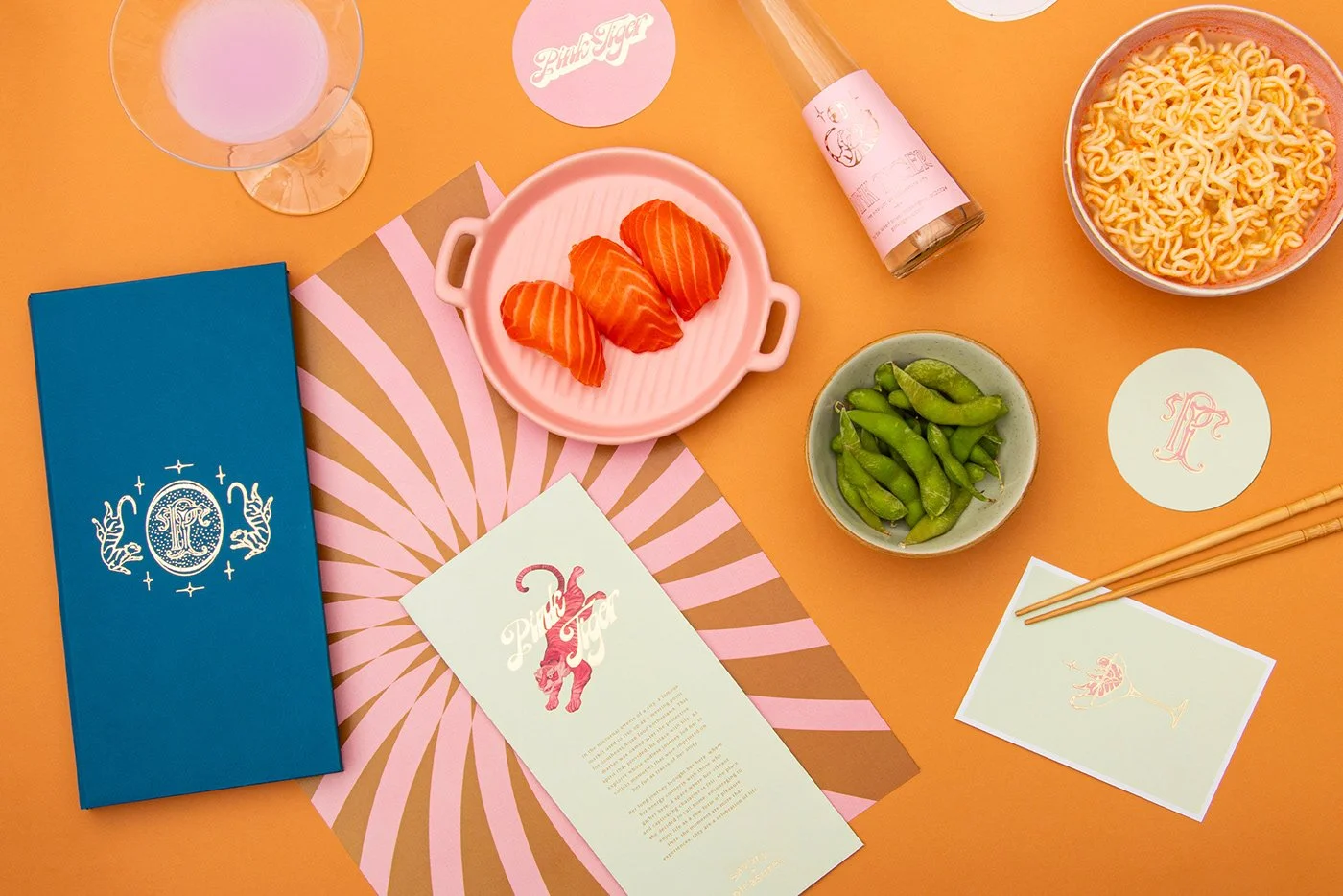
The restaurant industry is a crowded visual echo chamber where we see the same tropes used repeatedly. Asian cuisine specifically suffers from a predictable vernacular of red and black palettes alongside bamboo-inspired typography and dragons. It becomes noise. It becomes invisible. Then you see work like Pink Tiger by Estudio Albino. You stop scrolling. You look. You pay attention. This brand identity for the "recreational Asian cuisine" concept breaks the mold by ignoring the mold entirely. It steps outside the expected visual codes of its category to create a world that feels less like a restaurant and more like a fever dream of 1920s luxury leisure.
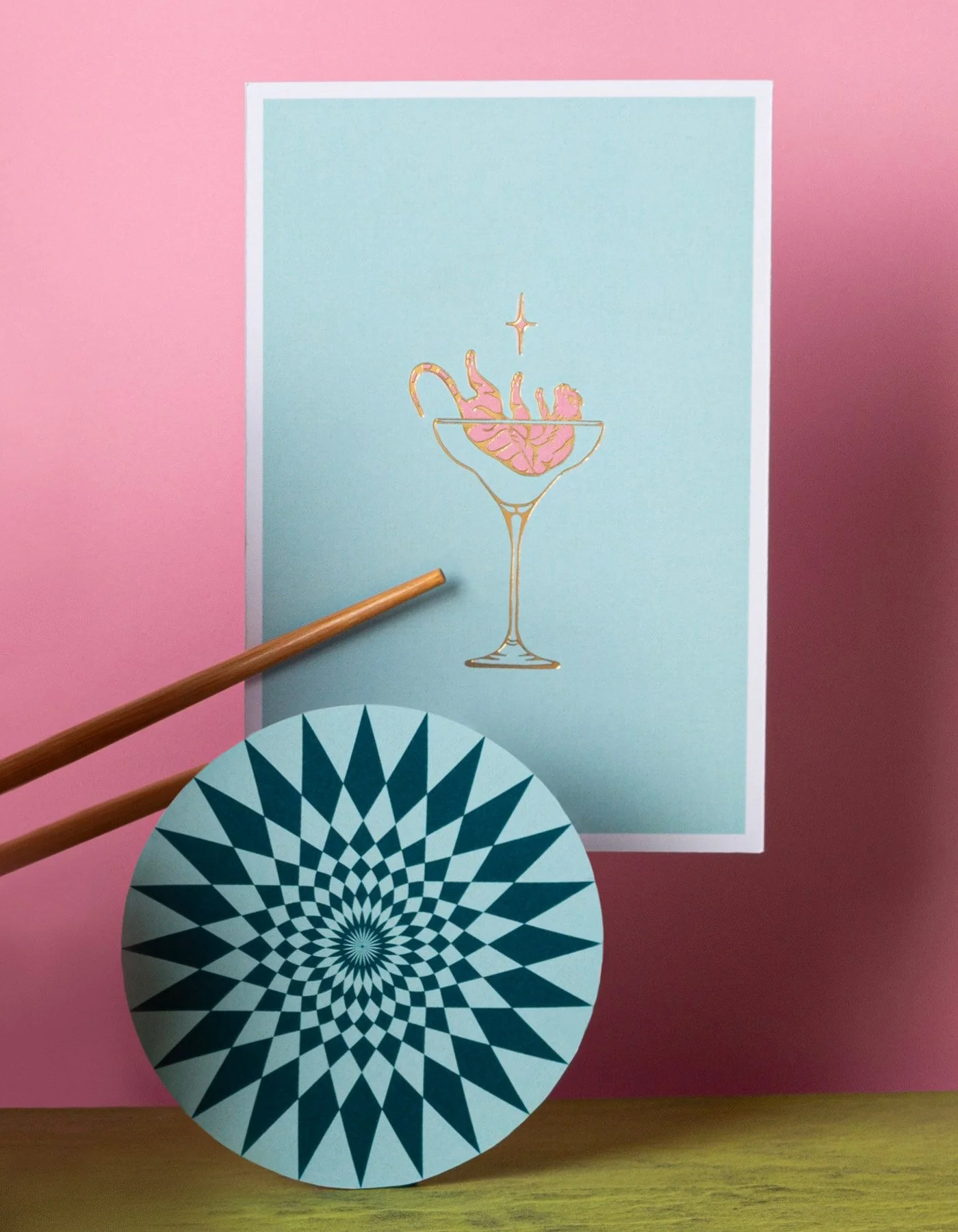
Estudio Albino anchors this brand in a concept they call "savory pleasures." That phrase alone does heavy lifting because it moves the brand positioning away from the commodity of food and into the realm of experience. This is a brand built on the Lover and Jester archetypes. It seeks to seduce you with beauty while making you laugh at a tiger drunk in a martini glass. The strategy here is clear. Pink Tiger competes on the authenticity of the vibe rather than the authenticity of the cuisine in the traditional sense. It promises an escape. It promises a good time. That is a powerful hook in a post-pandemic world where diners crave transportation and entertainment alongside their sustenance.
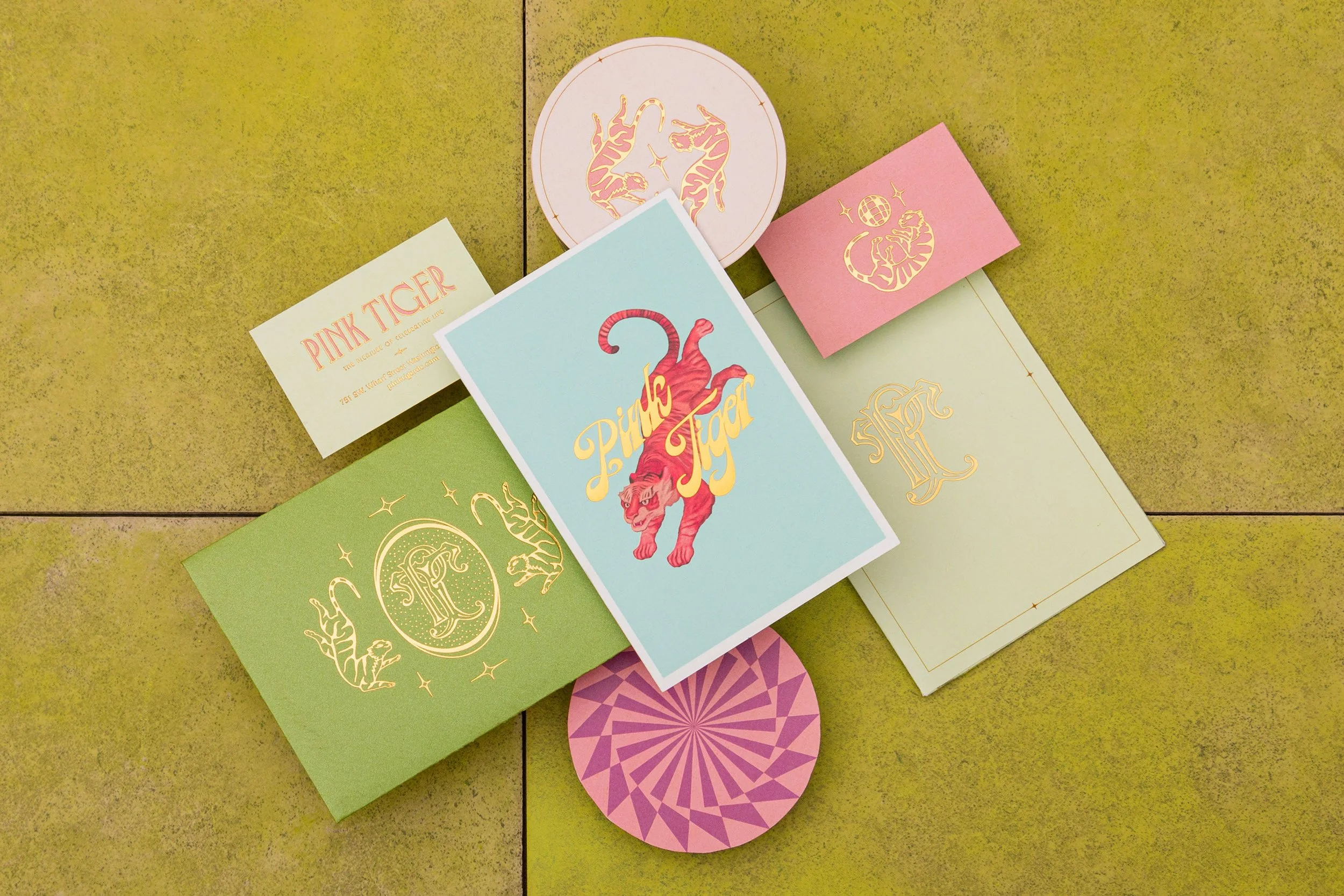
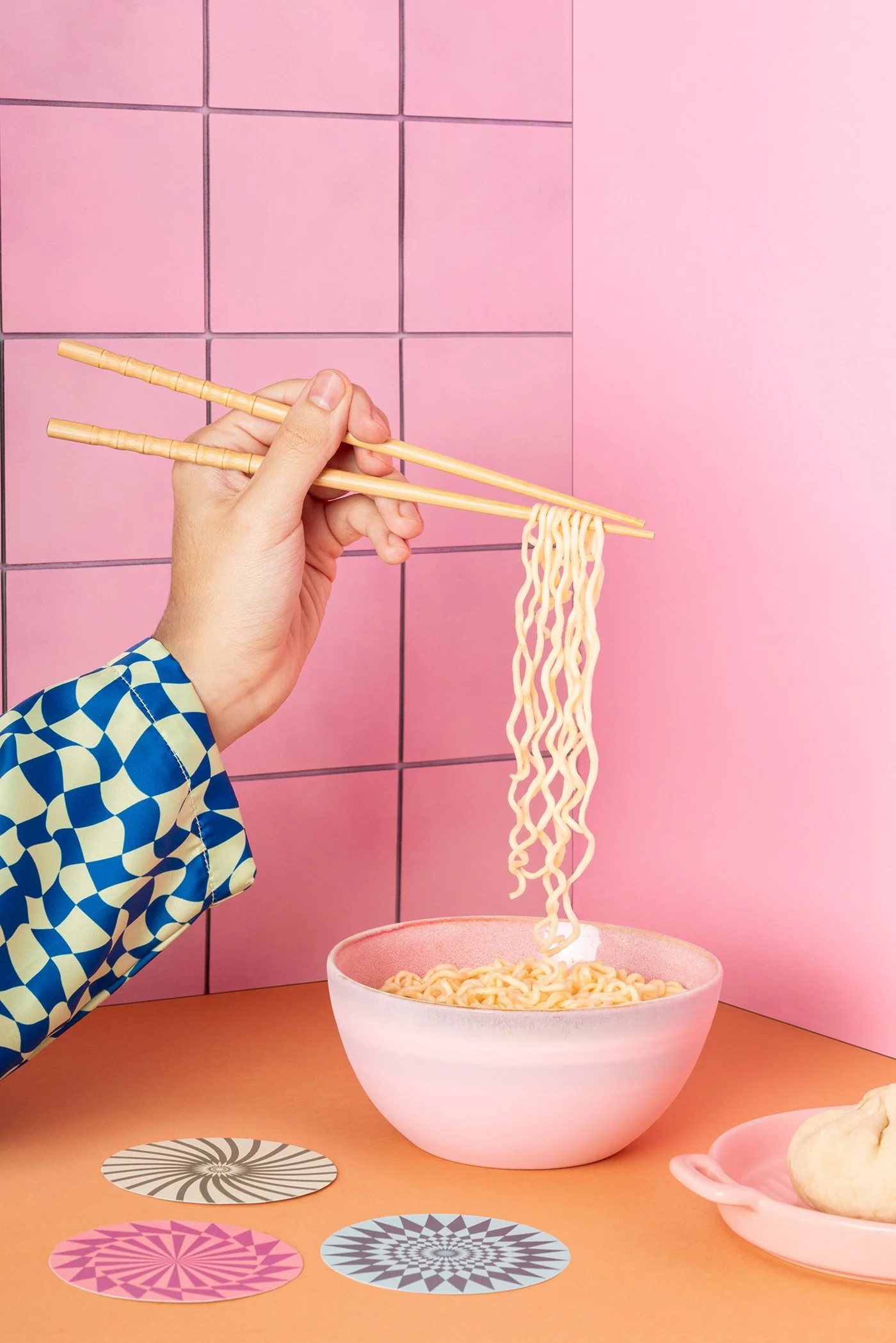
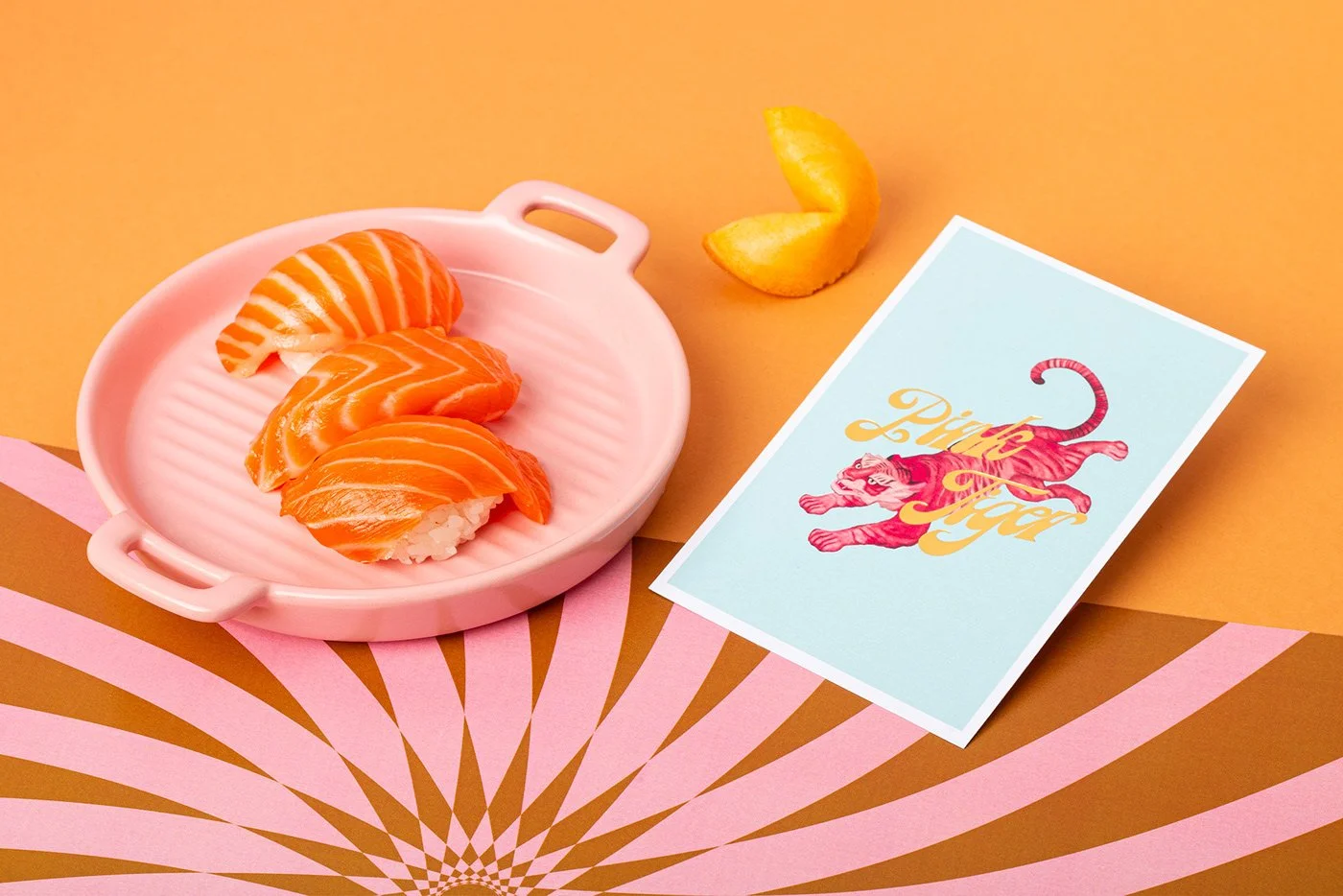
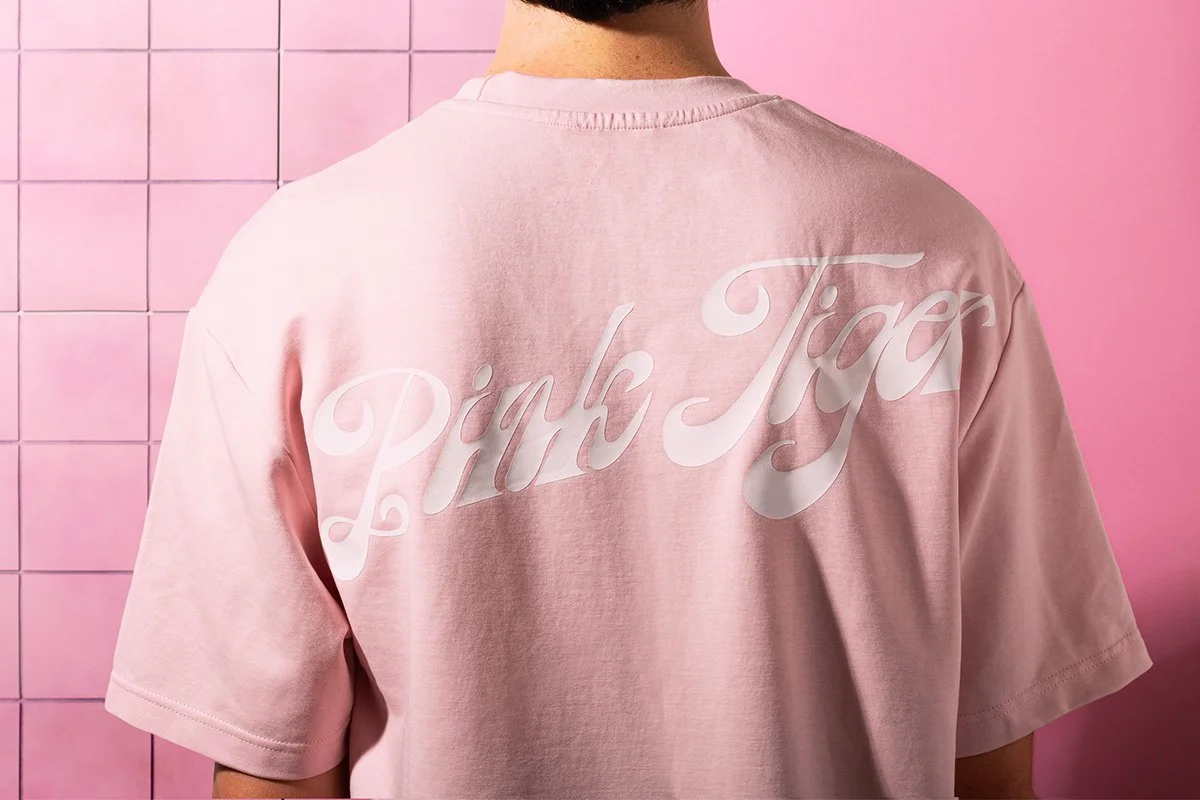
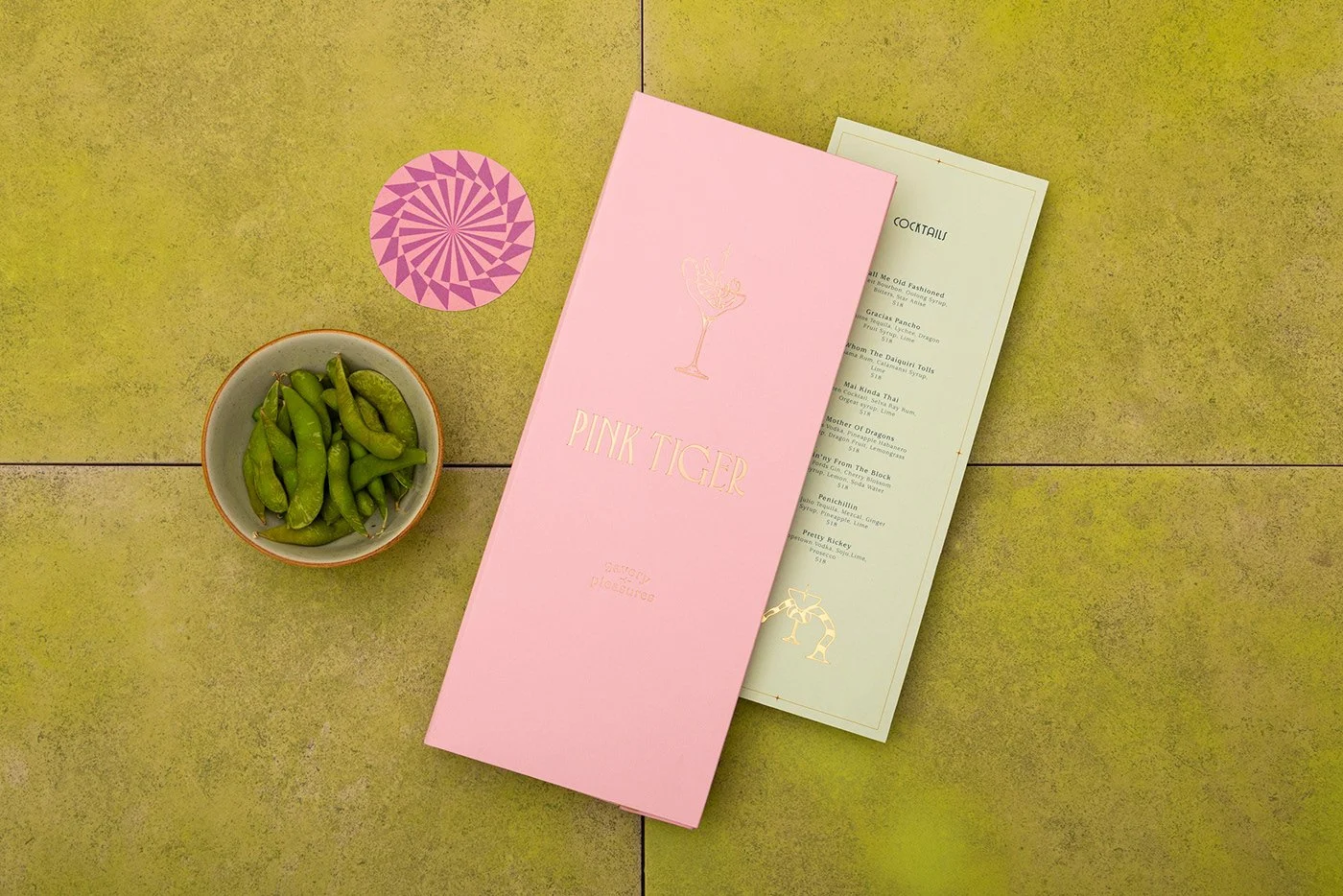
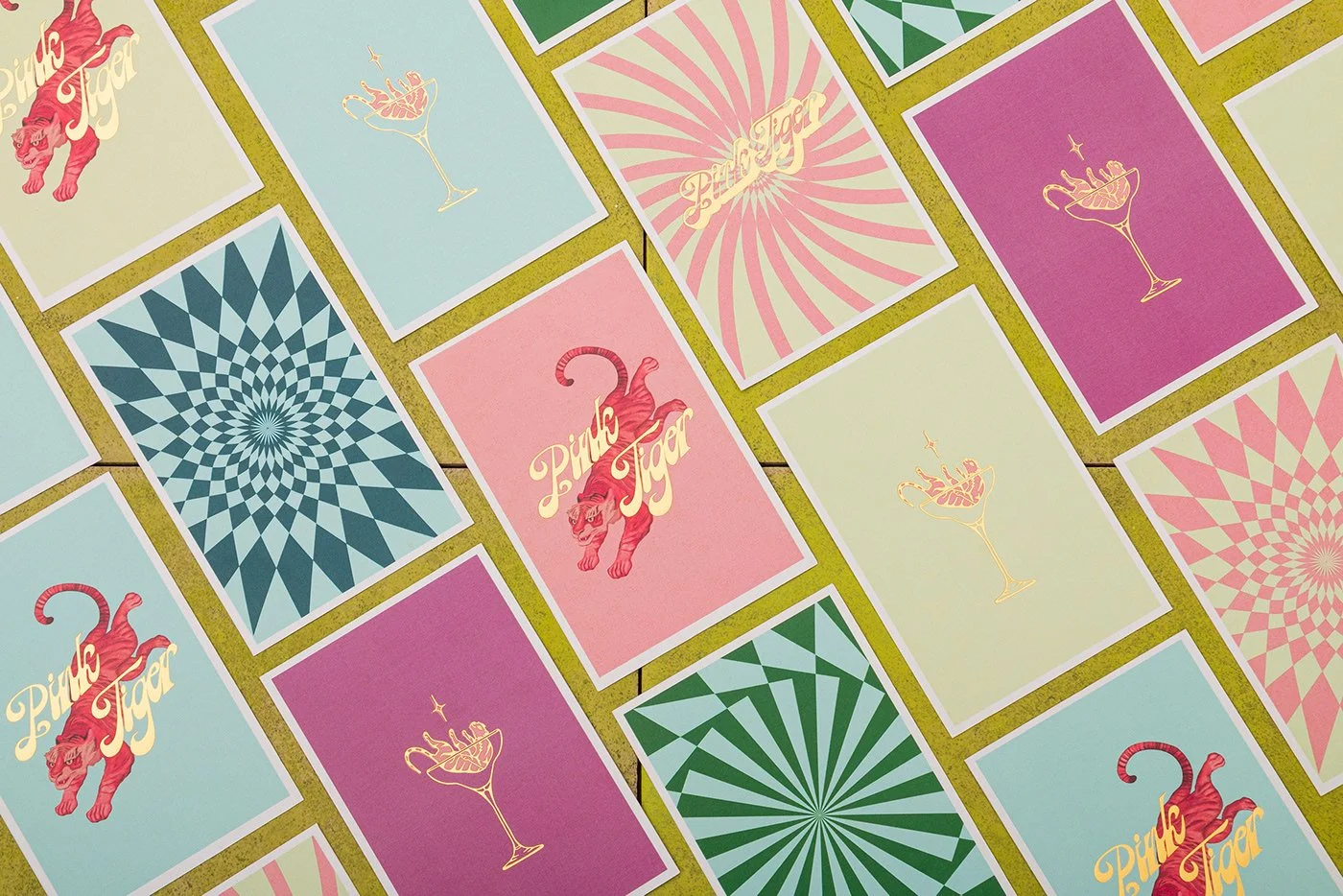
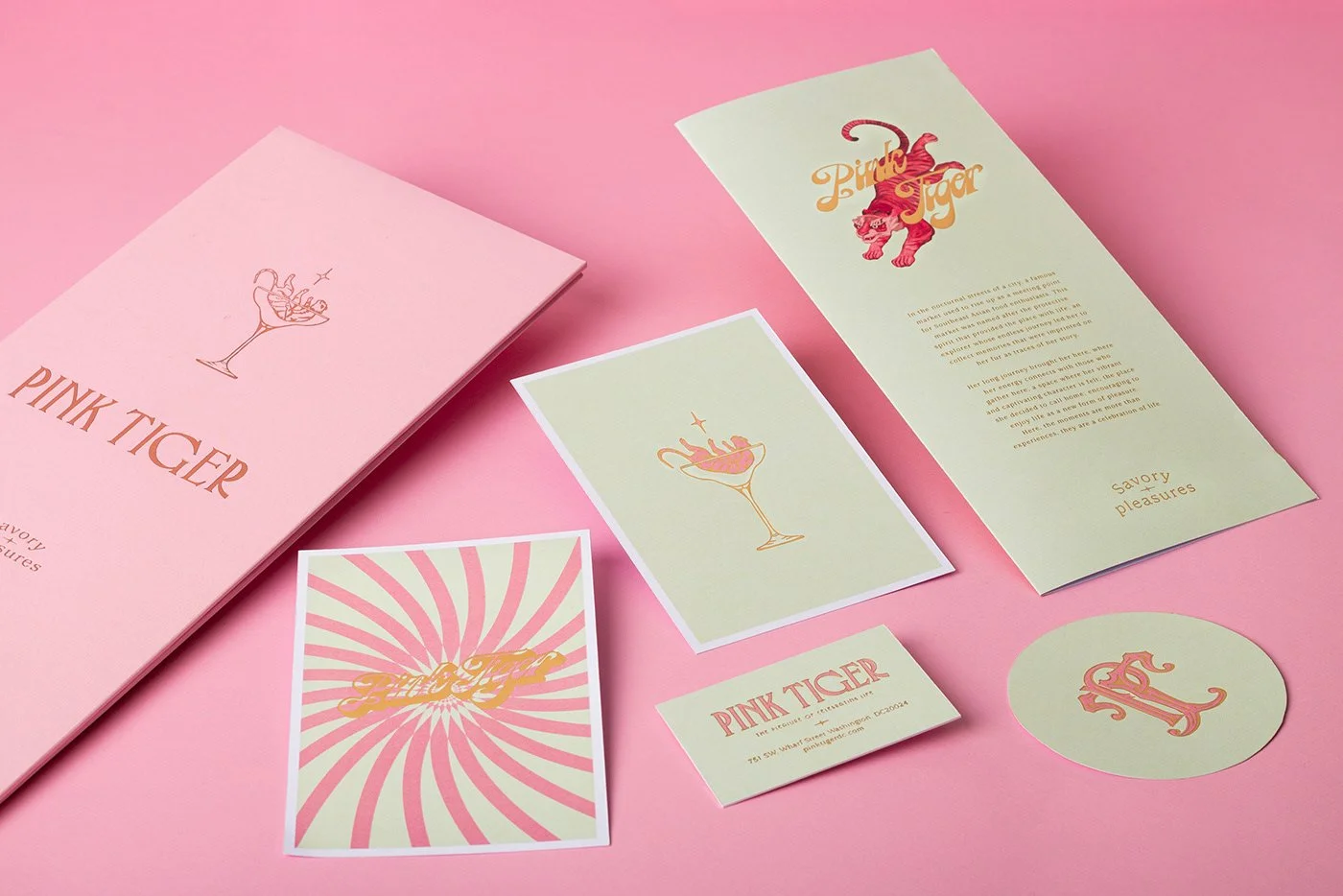
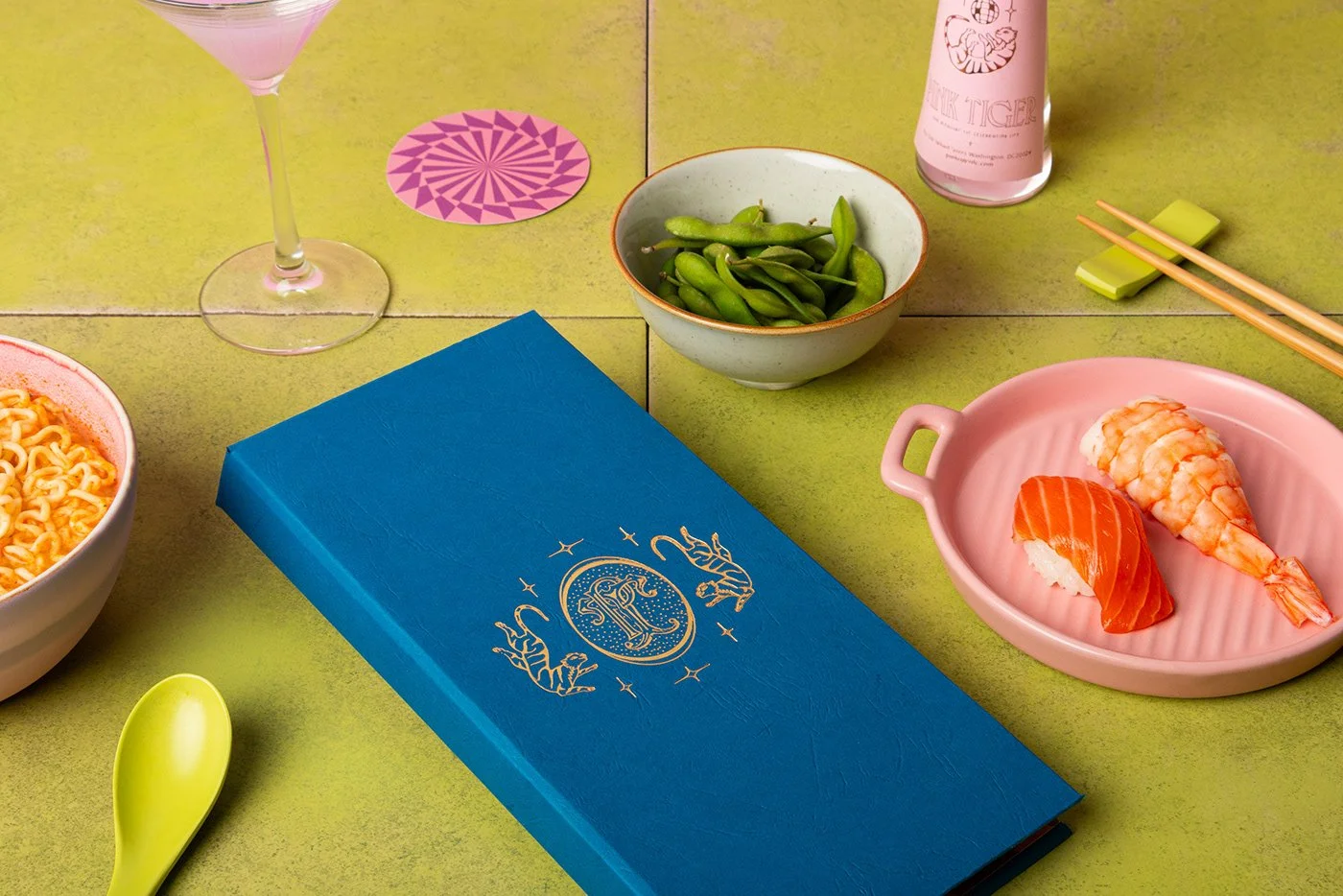
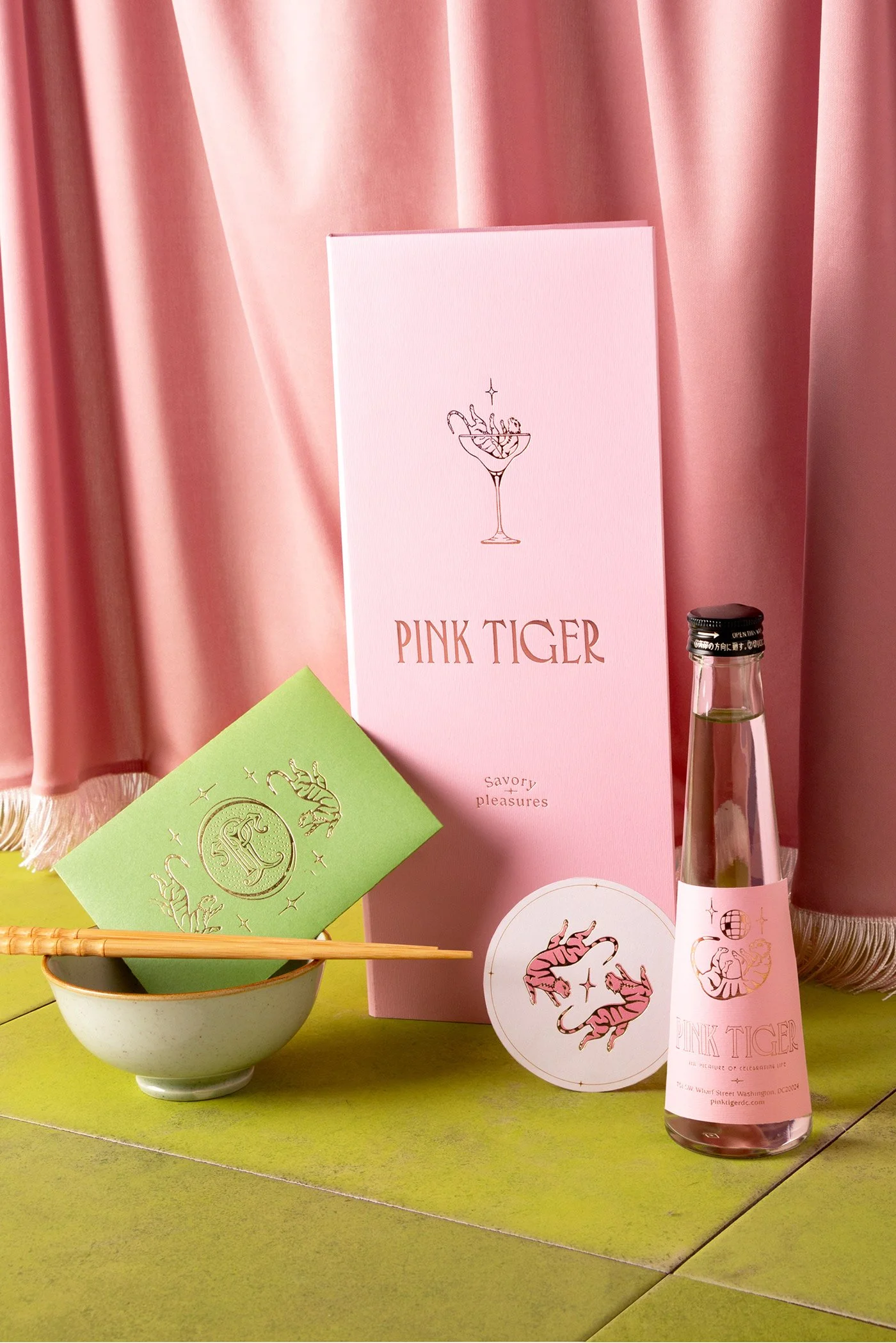
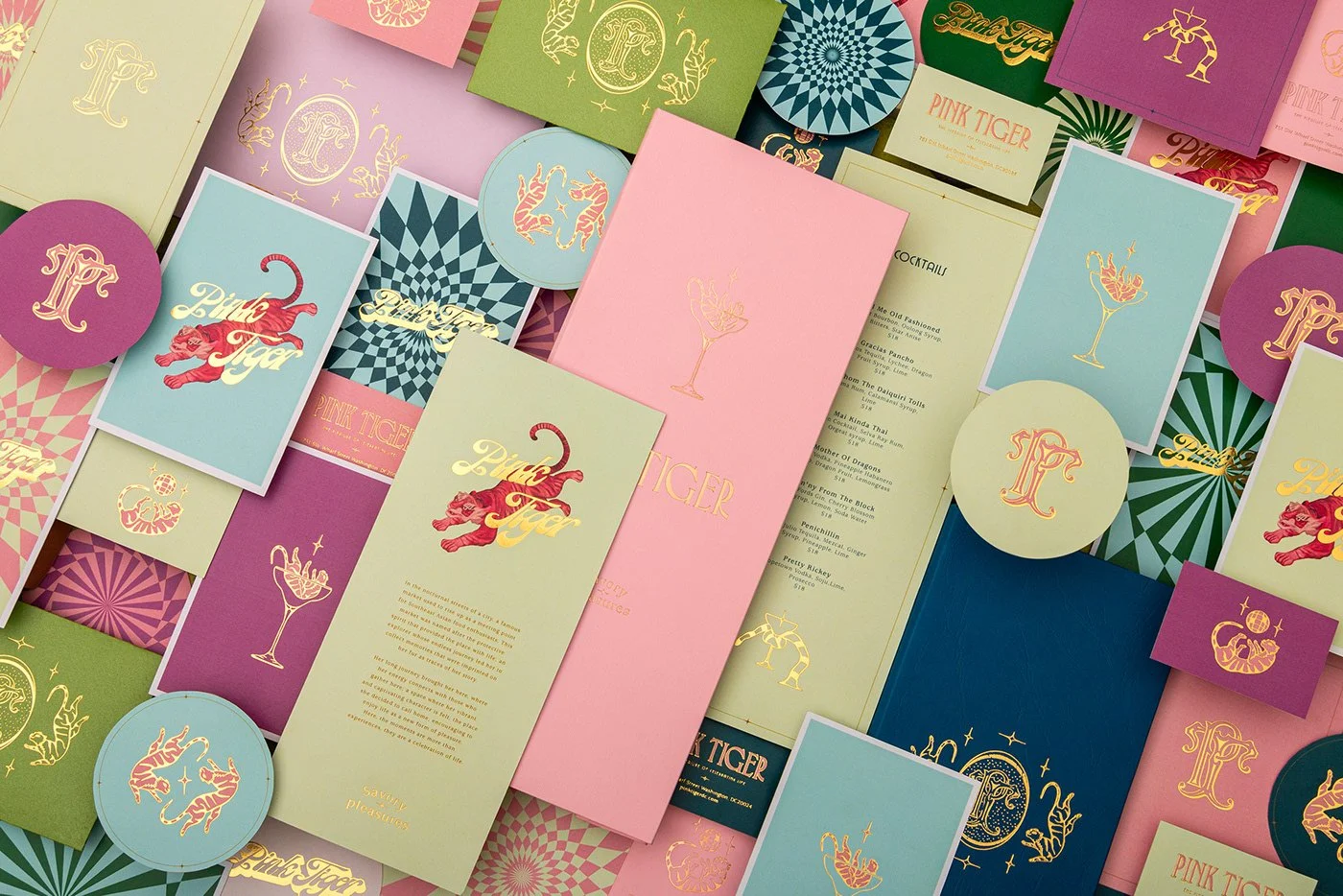
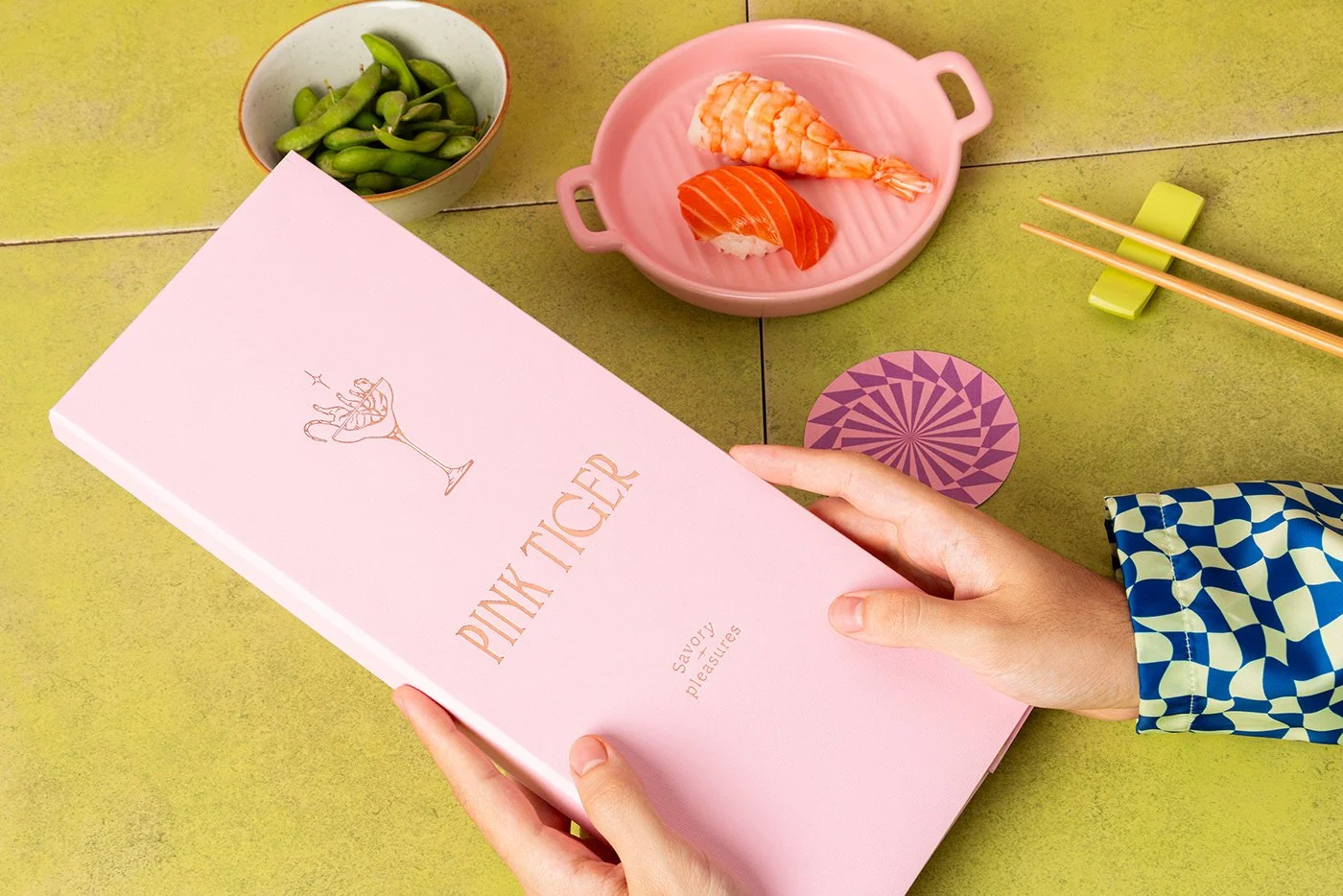
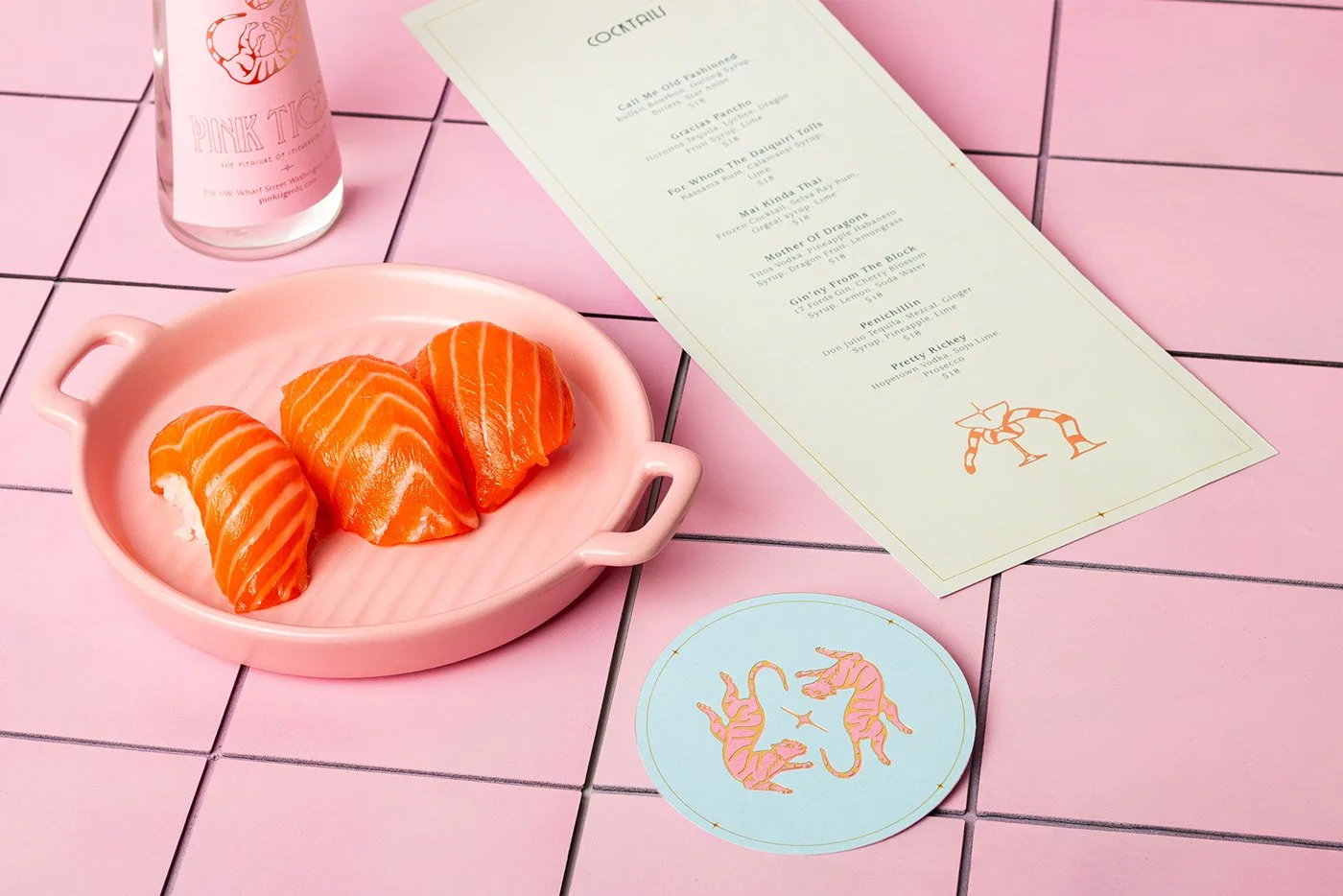
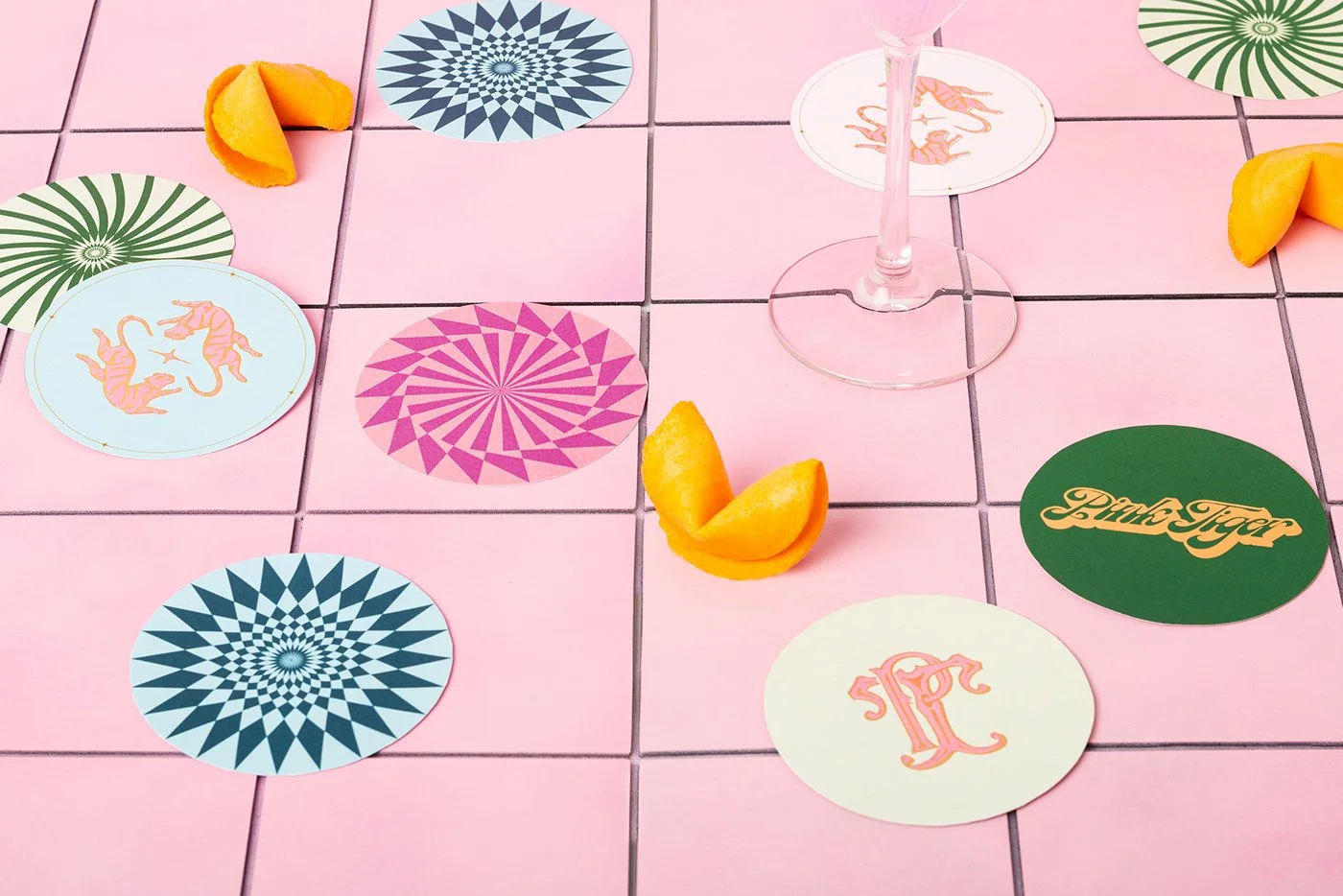
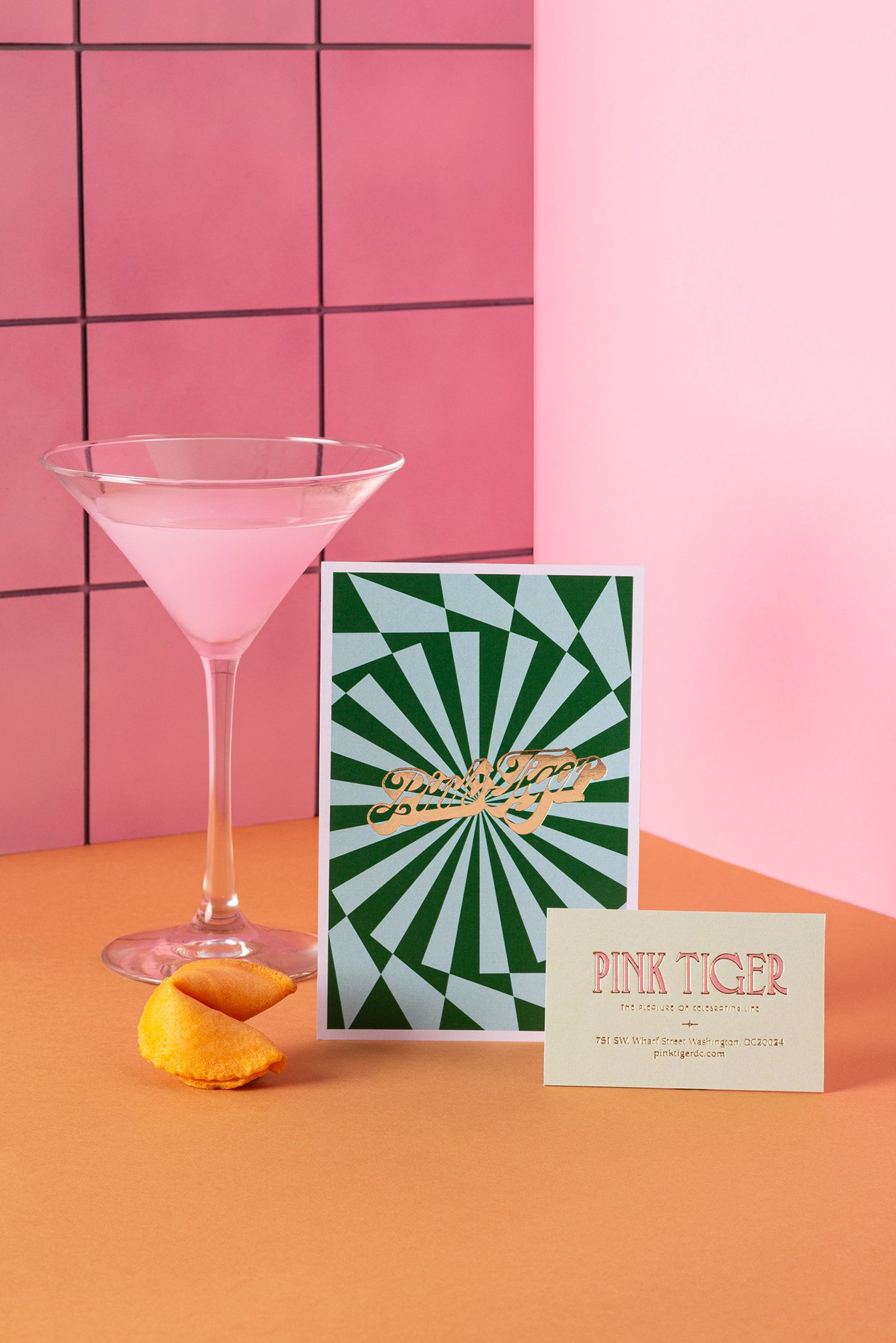
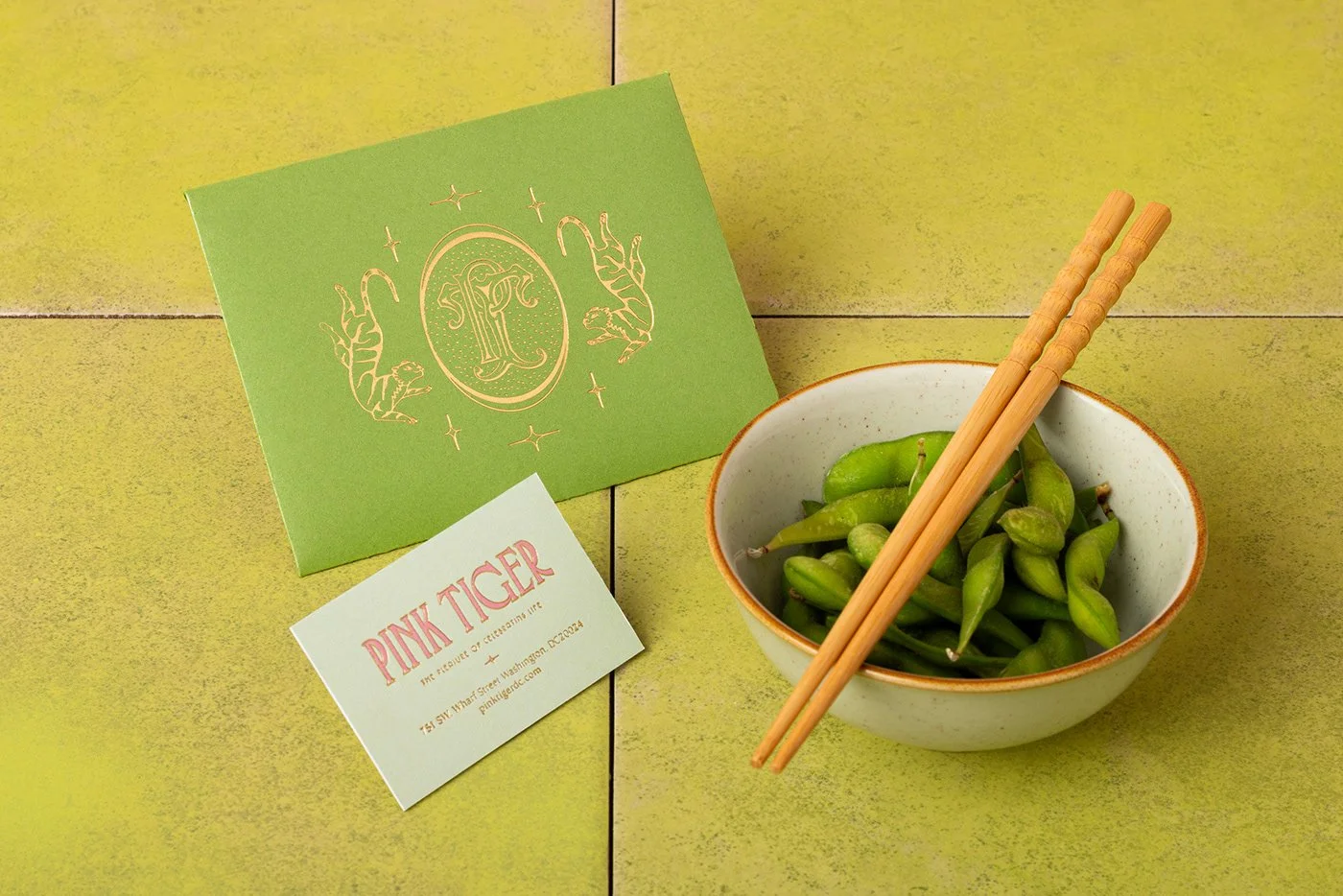
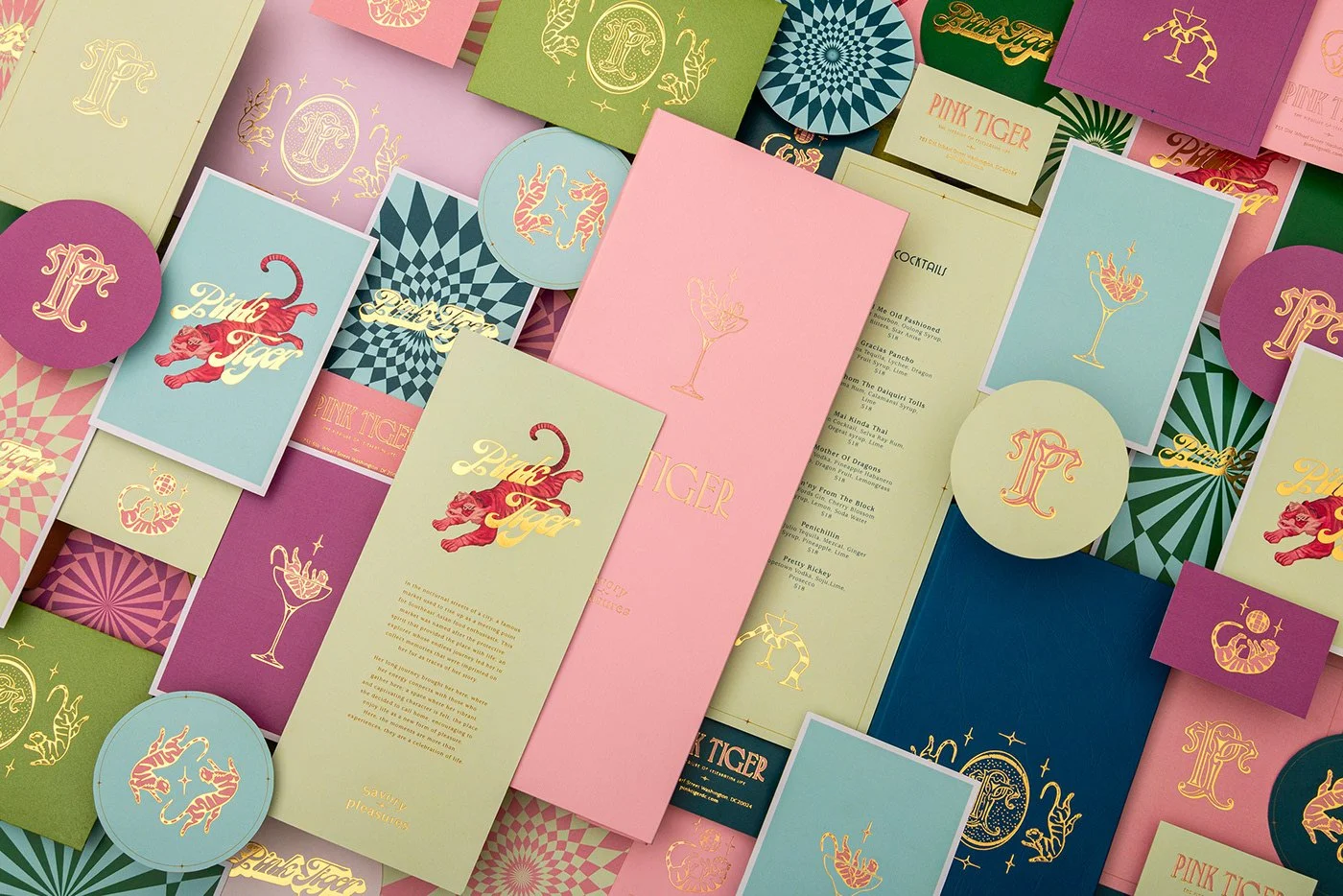
The visual identity is where this brand earns its stripes. The color palette serves as the first indicator that we are far from a traditional Asian restaurant. The soft pinks, muted sage greens, and warm oranges evoke a Wes Anderson film set rather than a dim sum hall. This use of color is strategic. It signals to the patron that this experience will be modern, playful, and distinct. The typography deserves its own mention because the custom logotype feels like it was pulled from a Victorian-era tonic bottle or a high-end hotel from the Belle Époque. It is ornate. It is flowery. It creates a sense of history and luxury for a brand that is brand new. By pairing this intricate script with clean and modern sans-serif secondary type, Estudio Albino creates a tension that keeps the eye moving.
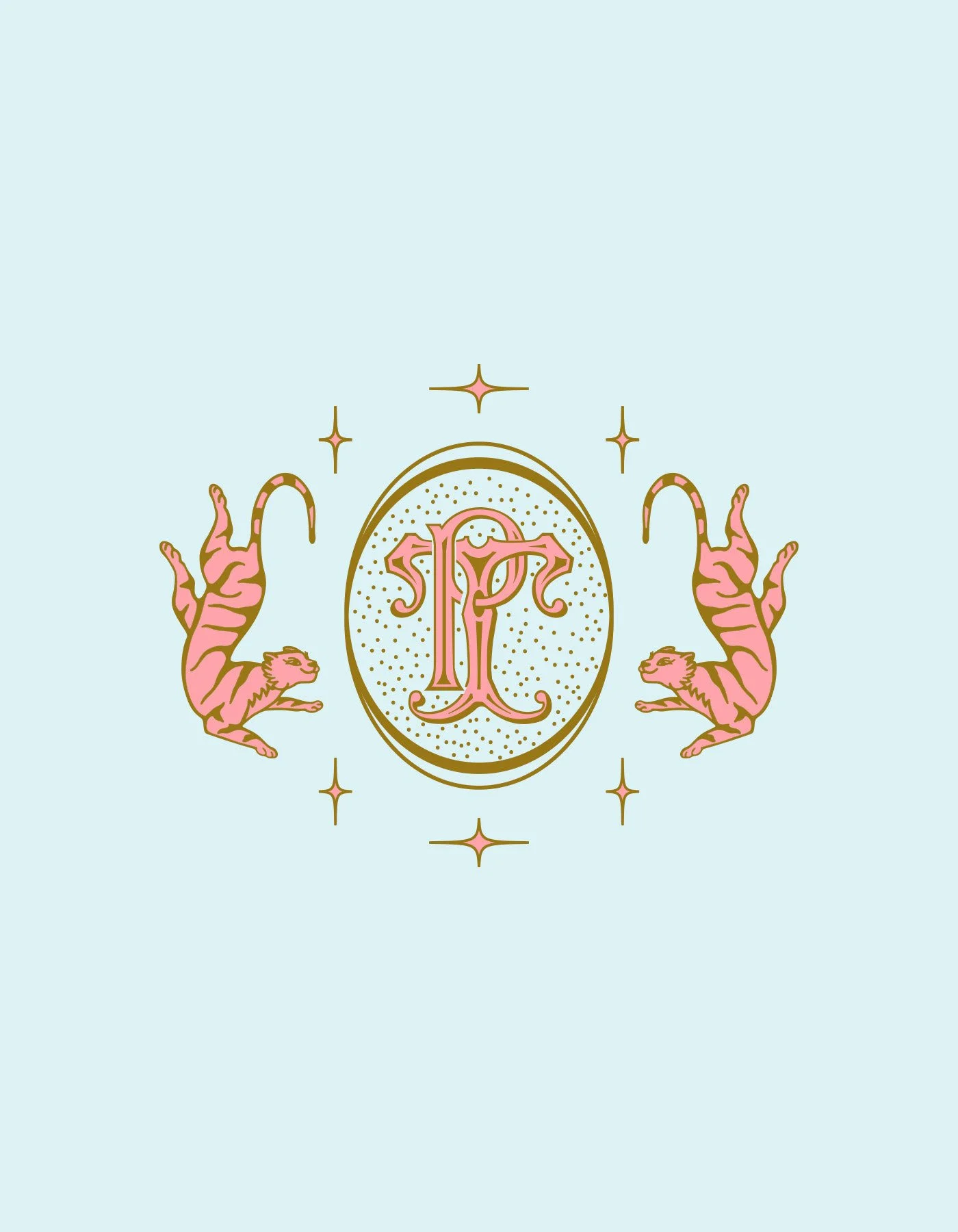
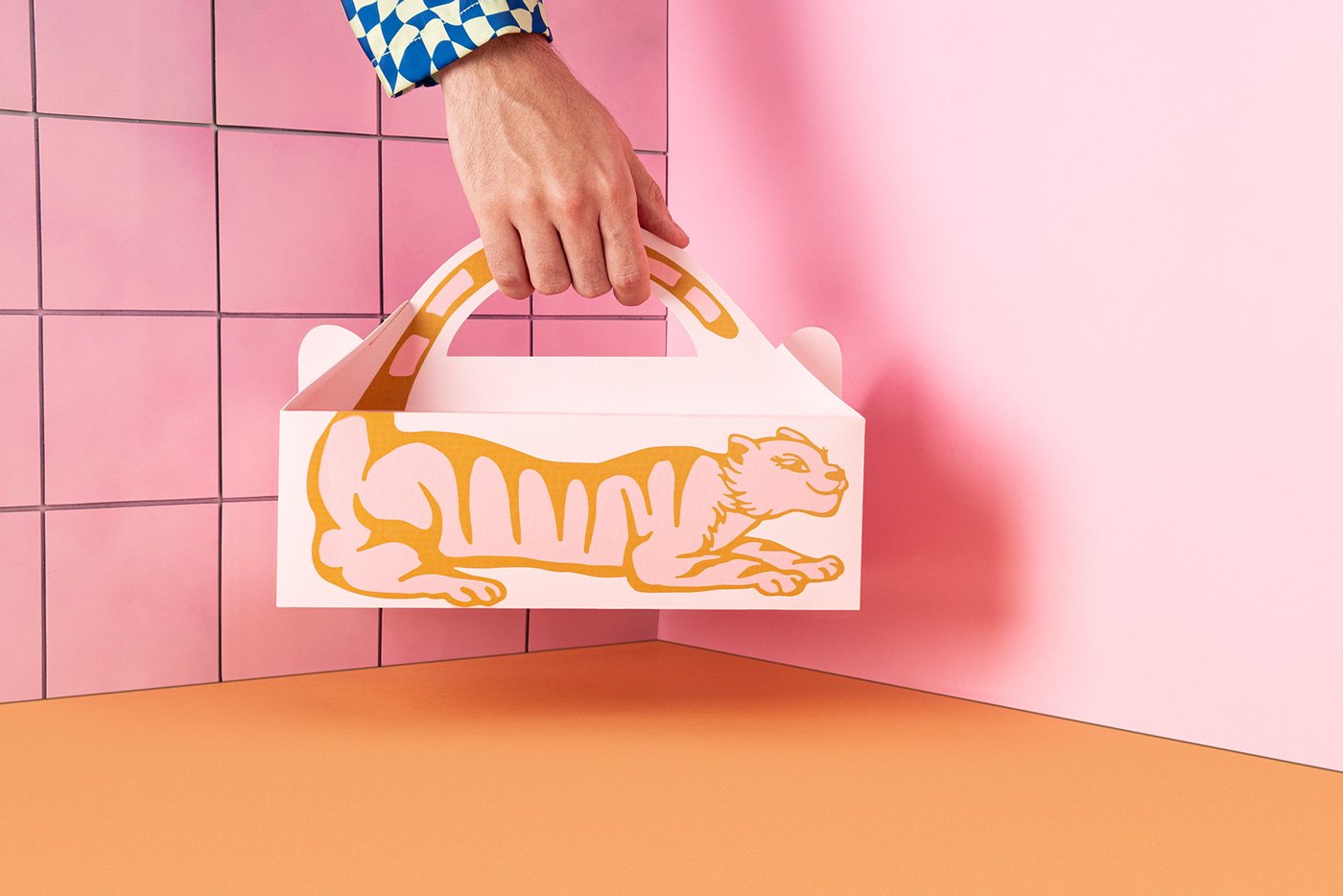
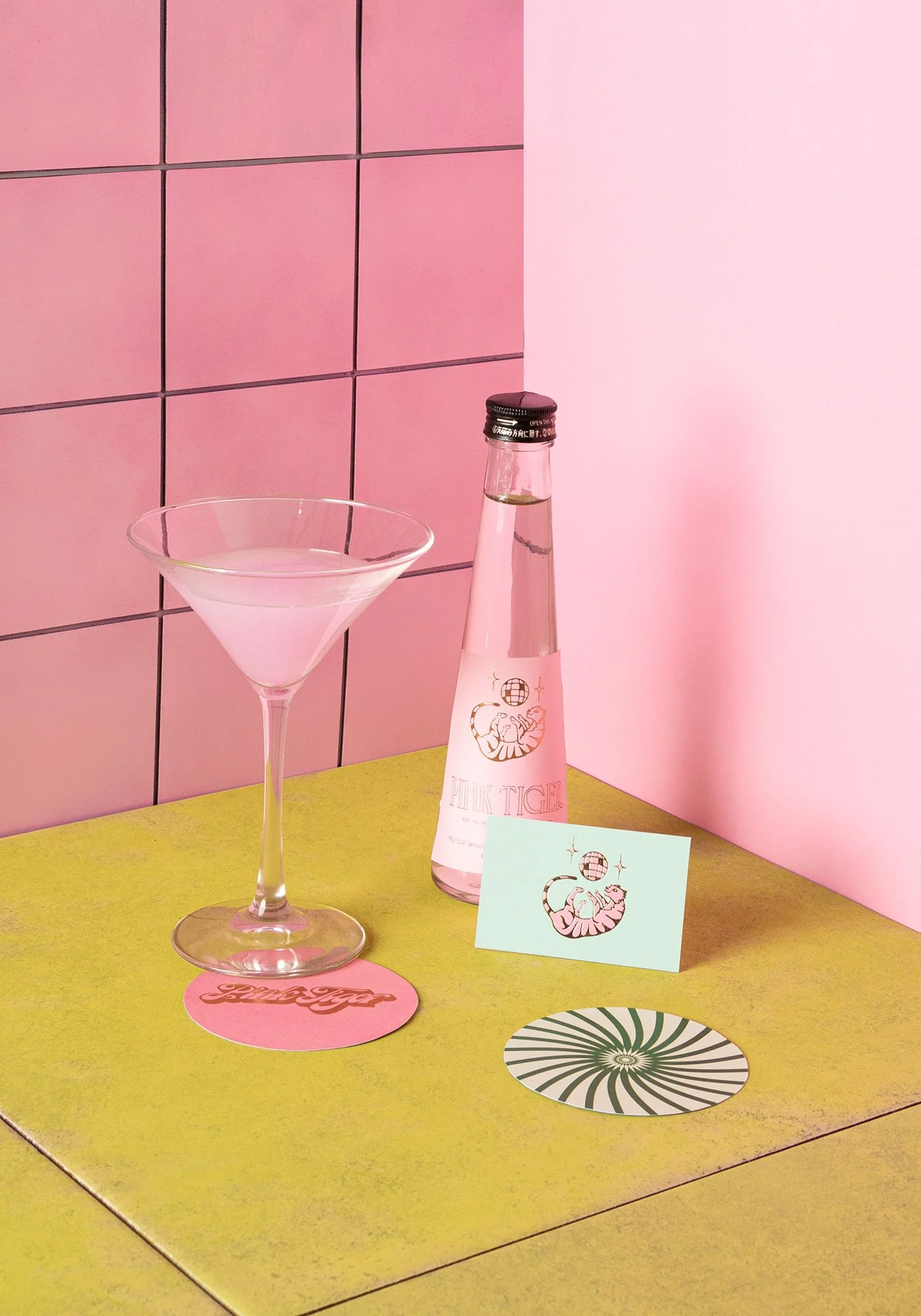
Mascots are making a comeback. Pink Tiger shows us why. The illustrations of the tiger are the heartbeat of this identity. We see the tiger lounging. We see the tiger swimming in a cocktail. We see the tiger stretching. This character personifies the brand's attitude. It is relaxed. It is indulgent. It is slightly surreal. This mascot gives the brand a flexible tool to inject personality into every touchpoint without needing to say a word. It does the heavy lifting of communicating the recreational aspect of the brand purpose.
While the work is stunning there are areas that risk choosing form over function. The ornate nature of the primary logotype pushes the boundaries of legibility. In a digital-first world where a brand lives as a tiny circle on an Instagram profile immediate readability is currency. The complexity of the letterforms might get lost at small scales. Additionally the heavy reliance on a specific retro-luxe aesthetic puts the brand at risk of aging quickly. Design trends move fast. What looks like the cutting edge of cool today can look like a dated fad in five years. The brand will need to evolve carefully to ensure it does not become a time capsule of 2024 design trends.
This work sits firmly within the rising tide of Playful Maximalism. We are seeing a rejection of the stark and sterile minimalism that dominated the last decade. Brands are embracing pattern and texture and complex typography and rich color stories. Pink Tiger leverages this movement to create a sense of abundance and joy. It fills the space. It gives the eye something to do. It treats the brand identity as a form of decoration and entertainment. Pink Tiger is a bullhearted brand. It has the guts to ignore the safe and established codes of its category to build something entirely its own. It uses design to carve out a unique position in the mind of the patron. It promises a specific feeling. This is how you build a brand that charges ahead of the herd. You define your own world. You invite people to step inside.